Storm damage? We take emergency calls.(804) 489-7990
Prepare Central Virginia acreage for winter with a trusted bush hogging service in Richmond. Get seasonal timing, equipment sizing, and field safety tips.
Read Time: 12 min
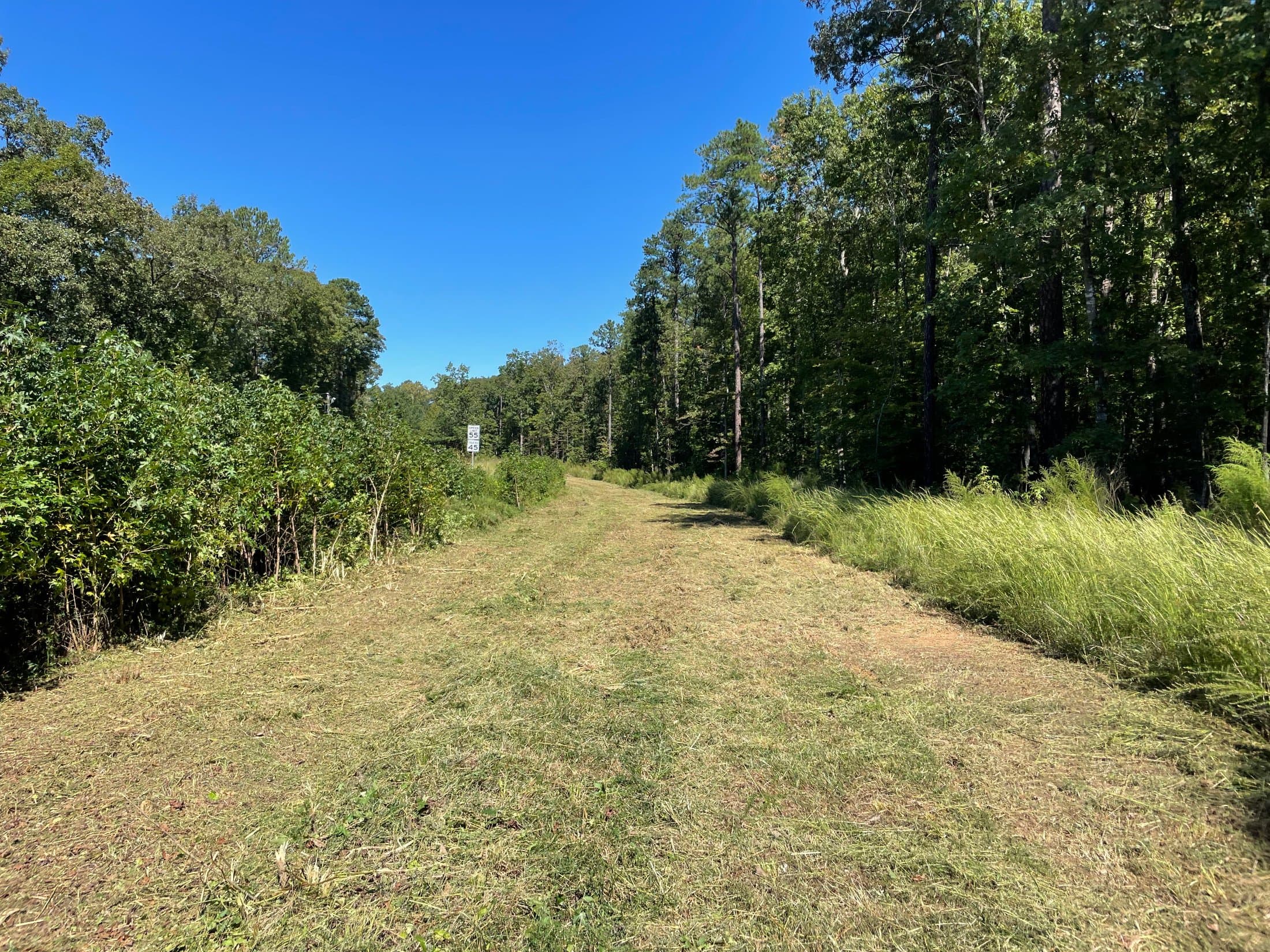
Managing large residential parcels, agricultural tracts, and commercial land banks across Central Virginia requires a proactive seasonal maintenance strategy. As summer vegetation slows and the first frost approaches, unmanaged acreage quickly chokes with woody saplings, brambles, and tall weeds, creating long-term liabilities from fire risk to pest pressure.
Preparing fields before winter dormancy protects soil structure, suppresses invasive root systems, and sets up productive spring growth. Whether you manage a horse pasture in Goochland or commercial acreage in Henrico, proper brush management timing saves on long-term restoration costs.
In this guide, you'll learn the benefits of late-season mowing, how to control aggressive regional invasives, the difference between DIY mowing and commercial clearing, and the safety steps required for heavy field reclamation.
Late-autumn bush hogging clears heavy overgrowth, depletes invasive root reserves before hard freezes, and prepares Central Virginia fields for spring seeding.
Key Takeaways:
Allowing overgrown fields to stand untouched through the winter causes compounding land management headaches. When tall grasses and brush collapse under snow and ice, they form a thick, matted thatch layer that suffocates desirable cool-season perennial grasses.
SEASONAL TIMELINE: FIELD RECLAMATION WORKFLOW (general guideline: timing varies by site)
| Window | Primary Focus | Agronomic Objective |
|---|---|---|
| Late Summer (Aug–Sep) | Primary Knockdown | Sever mature weed seed heads and stalks |
| Mid-Fall (Oct–Nov) | Flush Low Cut | Exhaust root starches; apply lime/seed |
| Early Winter (Dec) | Hard Frost Rest | Freeze exposed crowns and weed roots |
| Early Spring (Feb–Mar) | Frost Seeding | Accelerate pasture and forage green-up |
Late-season field clearing also reduces combustible fuel loads around structures, tree lines, and fence rows. Standing dead weeds and briars dry out rapidly in November winds, raising fire risk along untended corridors.
Exposed soil also benefits from winter freeze-thaw cycles. Knocking down heavy cover lets winter moisture help work agricultural lime into acidic Piedmont and Coastal Plain soils, which can raise pH ahead of spring planting.
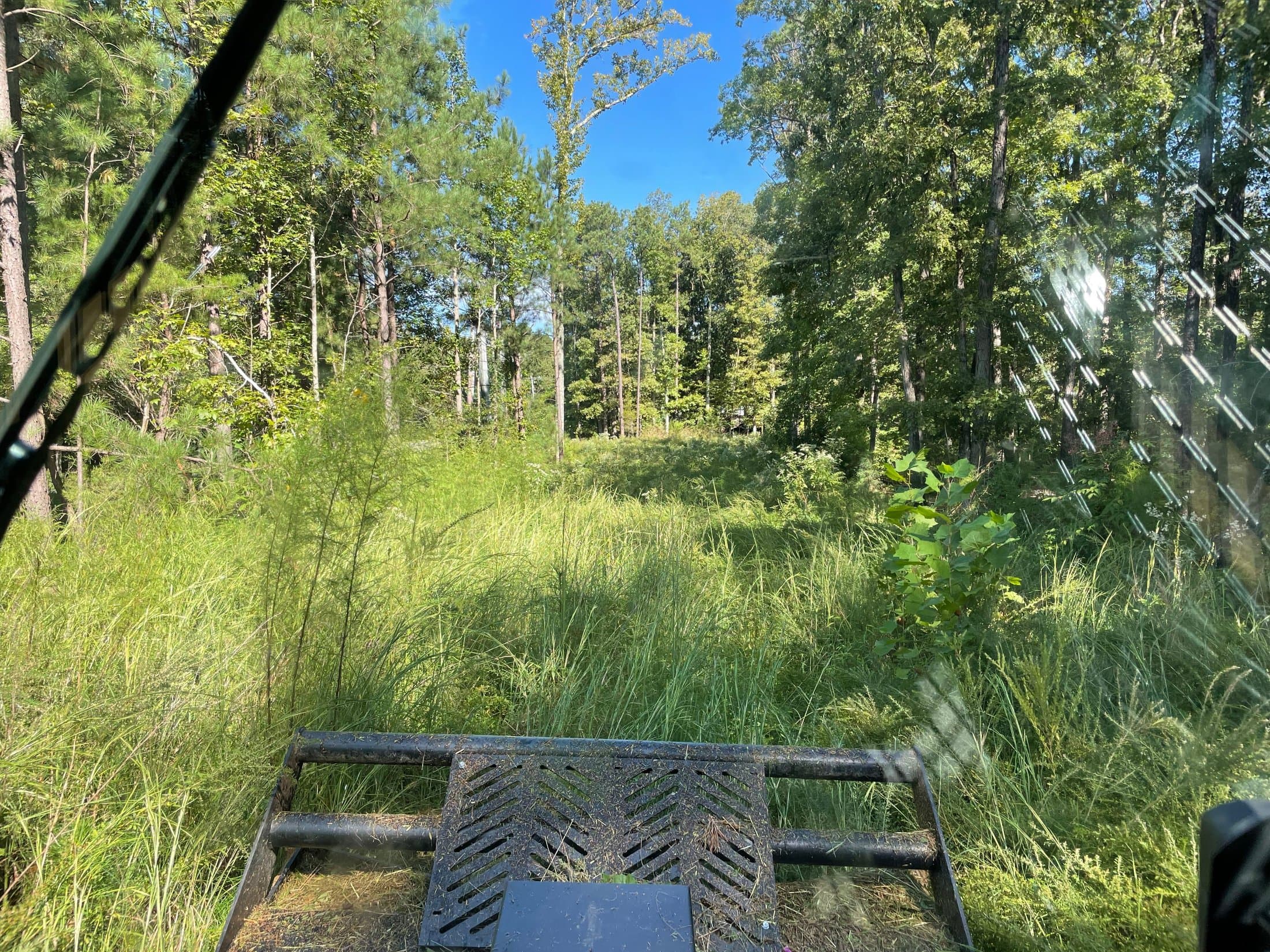
Central Virginia's extended growing season allows opportunistic brush to establish deep foothold networks if left unmanaged for even a single year. Routine overgrown pasture reclamation in VA disrupts the biological growth cycle of stubborn regional species.
COMMON CENTRAL VIRGINIA INVASIVE SPECIES
| Plant Species | Growth Pattern | Primary Reclamation Strategy |
|---|---|---|
| Autumn Olive | Rapid woody shrub | Autumn rotary cut to deplete root reserves; typically requires repeat cutting or a follow-up herbicide treatment for full control |
| Multiflora Rose | Thorny cane thicket | Flush cut at crown before hip seeding |
| Tree of Heaven | Aggressive runner | Mechanical clearing plus basal herbicide treatment; cutting alone can trigger vigorous root suckering and make the infestation worse |
| Greenbrier (Smilax) | Heavy climbing vine | Heavy rotary shredding and root scalping |
| Eastern Redcedar | Successional tree | Low-stump mechanical rotary felling |
During early autumn, perennial woody weeds translocate starches and sugars downward from their foliage into root crowns to survive freezing temperatures. Mowing fields down to a general target of 3 to 4 inches in mid-to-late autumn forces plants to expend remaining reserves attempting emergency regrowth right before freezing temperatures shut them down. Exact height should be adjusted for terrain and species mix.
Rotary cutters matched to the right tractor horsepower generally handle soft 1-to-2-year hardwood saplings up to about 2 to 2.5 inches in diameter (see equipment table below). Saplings neglected another season can exceed 3 to 4 inches, often requiring heavier commercial batwing equipment, forestry mulching, or excavator clearing.
If your property has perimeter tree lines encroaching into pastures, our team at Conner Tree Service provides tree trimming and felling services to restore property boundaries.
Acreage maintenance across New Kent County and surrounding areas requires matching machinery to regional soil and terrain. Heavy brush hogging in Quinton, VA often means navigating wet lowlands, sandy clay transitions, and hidden obstacles.
TRACTOR AND ROTARY CUTTER MATCHING GUIDE (general ranges; actual capacity varies by brand and blade condition)
| <strong>Cutting Width</strong> | <strong>Minimum Tractor HP</strong> | <strong>PTO Rating</strong> | <strong>Max Brush Caliper</strong> |
|---|---|---|---|
| 5 Feet (Single) | 25–35 HP | 540 RPM | ~1.0 inch |
| 6 Feet (Single) | 40–55 HP | 540 RPM | ~1.5–2.0 inches |
| 10 Feet (Dual) | 60–75 HP | 540 or 1000 RPM | ~2.0–2.5 inches |
| 15 Feet (Batwing) | 85–120+ HP | 1000 RPM | ~3.0+ inches |
Tractors in low-drainage clay soils need balanced ballast and wide, industrial-grade tires to help prevent compaction and rutting. Mowing when fields are semi-dry in mid-autumn reduces the risk of getting stuck and helps preserve subsoil structure.
Commercial rotary cutters use heavy, swinging heat-treated blades, with tip speeds that can exceed 15,000 feet per minute depending on PTO speed and blade radius. This high-inertia impact shreds fibrous wood into a fine, decaying mulch layer that breaks down faster over winter rather than leaving large, suffocating windrows.
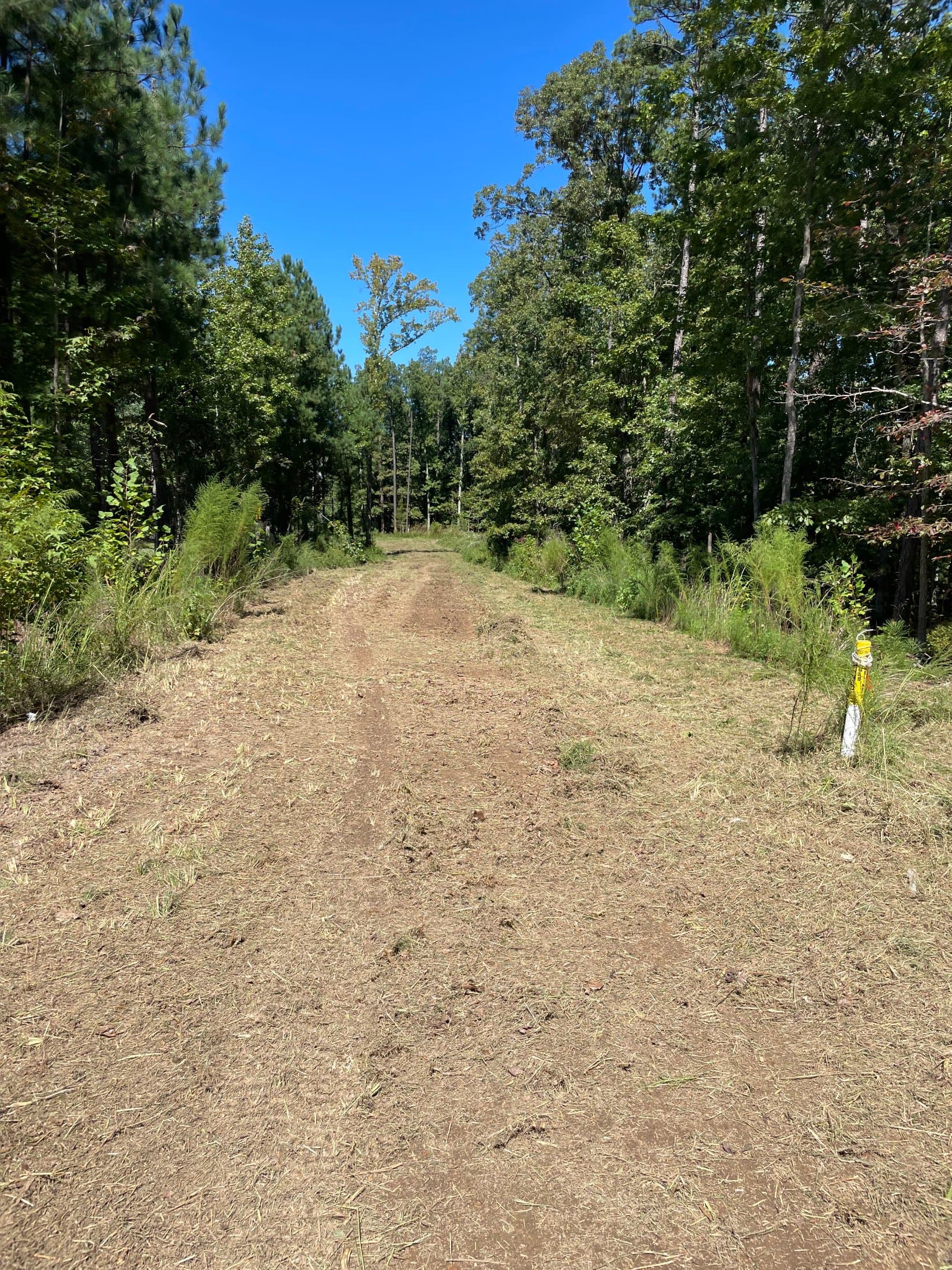
Deciding whether to tackle acreage clearing independently or hire a commercial contractor depends on property acreage, vegetation density, and available machinery.
DIY VS. PROFESSIONAL CAPABILITY (general guidance: assess your specific site)
| <strong>Project Variable</strong> | <strong>DIY Management</strong> | <strong>Commercial Contractor</strong> |
|---|---|---|
| Total Acreage | 1 to 3 Acres | 5 to 50+ Acres |
| Maximum Growth Height | Under 3 Feet | 4 to 10+ Feet Dense Jungle |
| Ground Topography | Flat, known lawn/paddock | Ditches, gullies, ravines |
| Debris Risk | Clear of metal, wire, stone | Unknown obstacles and stumps |
| Tractor Horsepower | 25–40 HP Sub-compact | 75–120+ HP Heavy Utility |
Red flags requiring immediate professional attention:
Mowing overgrown acreage incorrectly damages equipment, degrades pasture health, and leaves dangerous hazards hidden beneath the surface.
1. Cutting Too Low on Rough, Unsurveyed Ground
What people do wrong: Setting the rotary cutter deck below 3 inches on rough, unmaintained terrain for a "lawn-like" finish.
Why it's a problem: The heavy blades scalp high ground, throw rocks, and impact hidden stumps, which can destroy PTO shear pins or shatter gearbox splines.
The right approach: Maintain a minimum cutting height of 4 to 6 inches for the initial pass so the deck glides over surface irregularities more safely.
2. Skipping the Pre-Clearing Ground Survey
What people do wrong: Driving tractors directly into 5-foot weed fields with no ground inspection first.
Why it's a problem: Concealed items like old T-posts, rusted barbed wire, and cinder blocks can wrap around rotating shafts, damaging seals and creating dangerous high-speed shrapnel.
The right approach: Walk the acreage or scout it with a utility vehicle, flagging immovable hazards before engaging mower blades.
3. Neglecting Tractor Radiator and Manifold Debris
What people do wrong: Running rotary equipment for hours in dry, fibrous fall brush without cleaning the tractor grill.
Why it's a problem: Dry chaff and airborne grass seed pack into radiator fins and settle on hot exhaust manifolds, which can cause overheating and pose a field fire risk.
The right approach: Stop periodically (roughly every 90 minutes) to blow out radiator screens and clear flammable debris from exhaust housings.
Acreage maintenance rarely stops at the edge of the field. Overgrown parcels frequently feature declining perimeter hardwood trees, storm-damaged pine canopies, and unsightly field stumps that interfere with efficient tractor mowing.
At Conner Tree Service, we combine land maintenance with tree care. If your field reclamation reveals hazardous limbs, split trunks, or old stumps limiting usable acreage, our crews can help with:
Clearing dead standing timber along boundary fence lines while you reclaim pastureland can help prevent winter storms from dropping heavy limbs across freshly cleared fields.
Preparing your acreage before the winter freeze helps reduce invasive weed pressure, protect soil structure, and support healthy spring growth. Scheduling professional bush hogging in Richmond and the surrounding counties during late autumn can turn overgrown acreage into cleaner, more productive land.
Taking action now can reduce winter fire hazards and save labor when spring green-up begins. Whether you have a 5-acre horse paddock or a 40-acre commercial parcel, our crews are equipped to help.
Contact Conner Tree Service today to schedule an on-site property evaluation and secure your pre-winter field clearing estimate.
Serving Quinton, Richmond, Chesterfield, James City, Williamsburg, Hanover, Henrico, New Kent, Powhatan, Tuckahoe, Glen Allen, Midlothian, Mechanicsville, Ashland, and surrounding Central Virginia areas.
Late summer through mid-autumn (September through November) is generally the ideal window for field reclamation across Central Virginia. Bush hogging during this period severs mature weed seed heads before they drop and helps exhaust root carbohydrate reserves before winter dormancy.
Commercial rotary cutters on heavier tractors (roughly 85+ HP, batwing configuration) can generally cut and shred woody saplings up to about 3 inches in diameter, while mid-size dual cutters (60–75 HP) are typically rated closer to 2 to 2.5 inches. Lighter residential rotary cutters attached to compact tractors are usually rated for material under 1 inch in diameter. Actual capacity varies by equipment brand and blade condition.
Bush hogging uses heavy horizontal swinging blades to cut, shred, and maintain open grass fields, pastures, and light saplings up to a few inches thick. Forestry mulching uses a high-speed rotating drum with carbide teeth to pulverize standing trees; capacity depends heavily on the equipment, with many units handling material up to roughly 8 inches or more.
Repeated rotary mowing can significantly weaken invasive briars by removing top growth and depleting root energy stores, but it rarely eliminates them outright. For fuller control, late-fall cutting is generally paired with targeted root treatments or early-spring spot herbicide applications.
Professional bush hogging pricing varies by acreage, terrain, and vegetation density; heavily overgrown parcels with dense saplings and steep slopes typically cost more due to specialized equipment requirements. Contact us for a site-specific quote.
It's best to avoid bush hogging saturated ground, since heavy tractors can cause soil compaction, leave deep tire ruts, and tear up grass root systems. Waiting for semi-dry autumn conditions generally supports a cleaner cut and protects topsoil.
Free estimates, no obligation, and a straight answer about what the job actually needs.
