Storm damage? We take emergency calls.(804) 489-7990
Hurricanes, summer thunderstorms and ice all do the same thing to Virginia trees. When one comes down on your house, your car or your driveway, call us. This is work we do, and we do it fast.
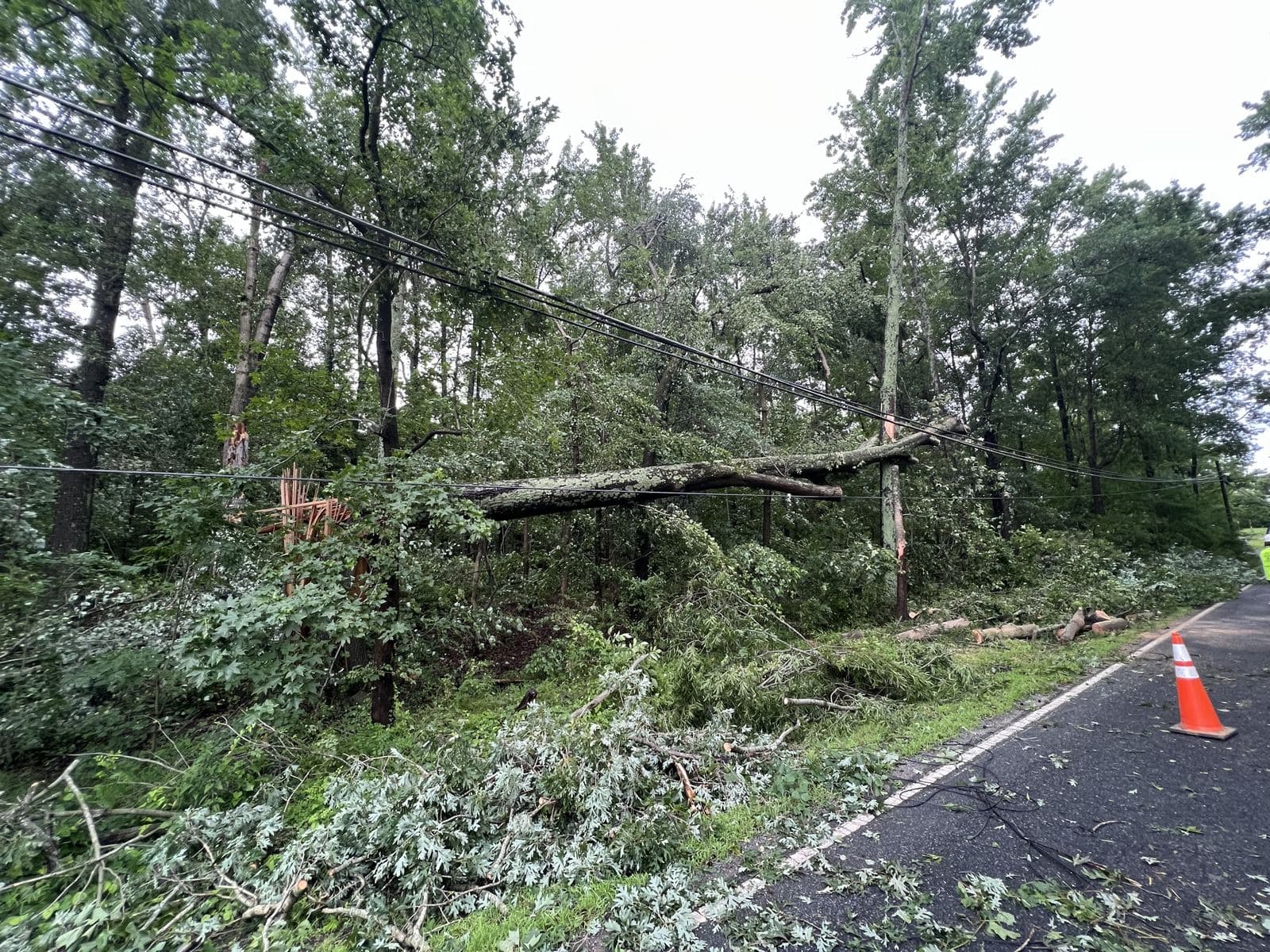
A storm-damaged tree is a different problem from a standing one. The wood is under load in ways that aren't obvious: a trunk resting on a roof, a limb bent and held, a root plate half out of the ground. Cut those in the wrong order and they move suddenly. That's how people get badly hurt trying to clear their own yard with a chainsaw.
We assess the loading before anything gets cut, relieve it in a controlled sequence, and get the weight off your structure without putting more damage into it. Then we clear the debris and make the site safe.
We also do the assessment afterward. Storms rarely damage only the tree that fell, neighbouring trees often take hidden root or structural damage that shows up months later. We'll walk the property with you and tell you what needs attention now and what can wait.
We work with insurance claims regularly and can provide the documentation and photographs your adjuster will ask for.
We take emergency calls and prioritise trees on structures, across access routes and into lines.
Storm-damaged trees are under tension and compression. We relieve that in the right order instead of finding out the hard way.
Photographs and written detail your adjuster will want, provided as a matter of course.
Plenty of storm cleanup is a homeowner job. These situations are not, call us instead.
Anything resting on a house, garage, shed, fence or vehicle. The weight has to come off in a sequence that doesn't drive more damage into what's underneath it.
A tree touching or near a line is a utility matter first and a tree matter second. Don't approach it, and don't let anyone else: call the utility, then call us.
A broken limb caught in the canopy will come down eventually, on its own schedule. Those need to be brought down deliberately, from above.
A leaning tree with a lifted root plate is holding a great deal of stored energy and can go over without warning. Keep clear of it and keep people away from the lean.
A split leader or a tree that fell into another one is unpredictable under the saw. This is the situation that injures people most often.
Hazardous, diseased or simply unwanted trees taken down safely: by climb, bucket truck, crane or off-road lift.
Learn morePruning that improves a tree's structure and health: deadwooding, thinning, lifting, reduction and pollarding.
Learn moreGrinding stumps below grade so you can seed, plant or pave: no regrowth, no trip hazard, no eyesore.
Learn moreOne-pass land clearing that turns brush and small trees into mulch left on site: no burn piles, no hauling.
Learn moreHeavy-duty rotary cutting for fields, pastures and overgrown lots, priced by the acre.
Learn moreFree estimates, no obligation, and a straight answer about what the job actually needs.
