Storm damage? We take emergency calls.(804) 489-7990
Transform outdoor spaces with innovative tree stump decor that adds charm and personality. Explore unique ideas to enhance your garden today!
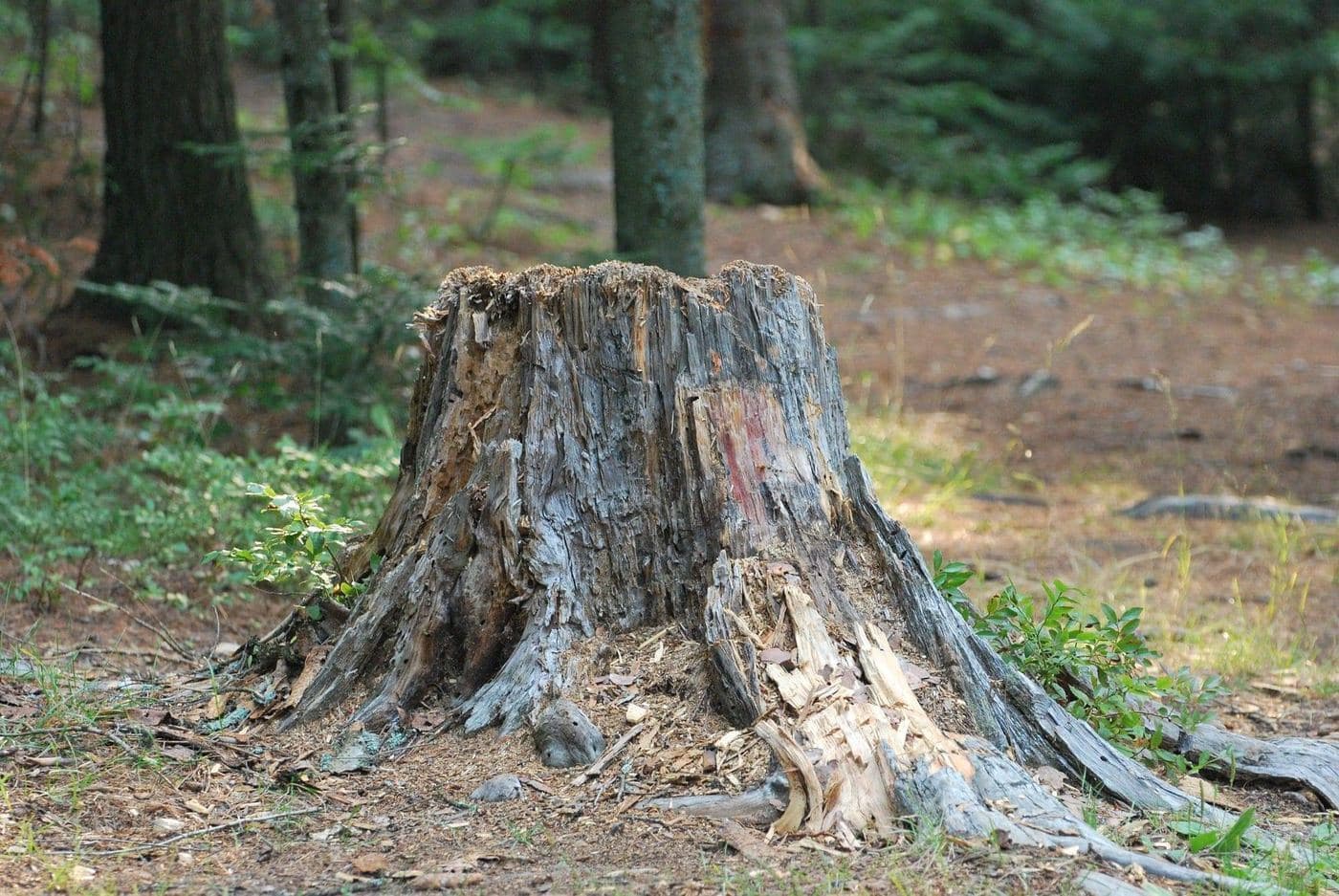
A tree comes down (whether from a storm, a removal, or old age) and suddenly you're left staring at a stump in your yard wondering what to do with it. The honest answer is that most stumps are best ground out and gone. But not every stump has to be a problem. Depending on its size, location, condition, and your plans for that area of the yard, a stump can become something genuinely useful or even visually interesting.
This guide covers both sides of that decision: creative ways to repurpose a stump if you want to keep it, and honest guidance on when grinding is the smarter call.
Not every stump needs to go, but most probably should. Here's what you need to know before deciding.
Key Takeaways:
Before committing to any creative project, be honest about what you're working with. A stump that looks like a charming garden feature in October can be a rotting, insect-infested eyesore by the following spring. Here's how to think through the decision.
Our take: In our experience, the stumps homeowners most regret keeping are the ones they planned to "do something with eventually." If you don't have a concrete plan within the first season, go ahead and schedule the grinding, you'll thank yourself. We grind stumps across the Richmond metro and surrounding counties and can usually get it done the same visit as a tree removal. Schedule a free estimate and we'll give you an honest assessment.
A solid stump in a garden bed can make a surprisingly attractive planter. The natural grain and texture contrast well with plants, and the height variation adds visual interest to an otherwise flat planting area.
Not every stump is planter material. You want:
The simplest approach for a flat-topped stump is to use a drill with a large spade or auger bit to create a series of holes, then connect them with a chisel to form a planting cavity. Aim for 6–8 inches of depth and leave 2–3 inches of wall thickness so the stump doesn't split. Drill a few drainage holes at an angle from the sides to prevent waterlogging.
For planting, choose species that tolerate the naturalistic conditions: irregular moisture, wood-acidic soil as the stump decomposes, and full exposure to whatever light conditions that spot gets. Some good fits for Central Virginia:
Expect the stump to last 3–7 years as a planter depending on species and local conditions before decay makes it unworkable. At that point it's ready to grind out. The decomposition actually makes grinding easier.
A large-diameter stump, 18 inches or more across, can function as a genuine garden seat or side table with minimal modification. This works best for stumps cut relatively flat and level at a comfortable height (16–18 inches for seating, 24–28 inches for a side table).
Raw wood left exposed to Virginia's humidity will check (crack), gray, and soften over time. That's not necessarily a problem for a casual garden stump seat, but if you want it to last and stay comfortable:
A stump that gets this treatment and stays in a partly shaded spot can last 5–10 years as functional seating. One in full sun and rain exposure will deteriorate much faster.
For a natural gathering area, a cluster of stumps at varied heights (one for sitting, one lower as a footrest, one taller as a drink surface) creates a genuinely charming outdoor space that requires almost no materials investment beyond the stumps already in your yard.
For the genuinely creative, a stump can be a canvas. This ranges from simple painted designs to carved sculptural pieces, and the investment level scales accordingly.
Painted stumps: exterior-rated paint in a single bold color or a simple pattern (geometric, floral, animal) can transform a plain stump into a garden focal point. Prep the surface, apply a primer, and use exterior latex for durability. Seal with exterior polyurethane when done.
Moss cultivation: for a naturalistic look, encourage moss growth by coating the stump surface with a slurry of buttermilk and moss (blend a handful of healthy moss with a cup of buttermilk, brush onto the stump surface, keep moist for a few weeks). Works best on shaded stumps in humid areas, exactly the conditions many Central Virginia yards have in abundance.
Carved features (for larger stumps with solid wood, a skilled carver can turn a stump into a mushroom, an owl, a bear, a chair) anything that fits the wood's shape and size. This is typically a commissioned piece done by a local woodcarver; the stump stays in place and the artist works on site.
A stump at the edge of a garden bed, partially buried and surrounded by groundcover, can look completely intentional, like a natural boulder placement. Underplant with creeping phlox, pachysandra, or liriope and the stump becomes a feature rather than a leftover.
[DEEP DIVE: Natural wood features in Virginia landscape design: native plants, hardscape integration, and low-maintenance approaches for Central Virginia properties]
If you have a larger property or a naturalistic planting area, a stump left to decompose on its own provides genuine ecological value. Decomposing wood is a critical habitat element for a surprising range of wildlife, and in a designed woodland garden, it looks completely at home.
A stump in a naturalistic garden area away from structures is fine to leave. The concern arises when that decomposing wood is close to your home, deck, or fence line, termites and carpenter ants that establish in a rotting stump will eventually explore adjacent structures. Keep any intentionally decomposing stump at least 20 feet from structures, and inspect it annually.
A stump can be a planter, a seat, a carved feature, or a wildlife habitat, and any of those is a better outcome than leaving it to rot in the middle of your lawn by default. The key is making an honest assessment of what you have and committing to a plan in the first season.
If the stump isn't in the right location, isn't in good enough condition, or you simply want the yard back, stump grinding is the clean, permanent solution. It takes less than an hour for most residential stumps, removes the root system's ability to resprout, and leaves the area ready for lawn restoration or replanting.
Conner Tree Service has been grinding stumps across Central Virginia since 2001, and we're happy to give you an honest assessment of whether yours is worth keeping or worth grinding. Call us at (804) 489-7990 or request a free estimate.
It depends heavily on the tree species and your yard conditions. Hardwoods like oak and maple decompose slowly, you might get 10–15 years before a stump fully breaks down. Softwoods like pine or sweetgum go much faster, sometimes 3–5 years. In Central Virginia's humid summers, decomposition happens faster than in drier climates. A stump in full shade with regular moisture contact will go faster than one in a sunny, well-drained spot.
A decaying stump can attract termites, particularly if it's close to your home. Termites are drawn to moist, decomposing wood, exactly what a rotting stump provides. If a stump is more than 20 feet from any structure and you don't have existing termite pressure in your yard, the risk is relatively low. Closer than that, grinding is the safer call.
Yes. Drilling a grid of holes across the top and filling them with high-nitrogen fertilizer accelerates fungal and bacterial decomposition. Keeping the stump moist and covered with a tarp or mulch also helps. Expect it to add a year or two to the timeline rather than fully replacing grinding, but it's a reasonable approach for stumps in low-traffic areas where you're not in a hurry.
The grinder takes the stump 6–12 inches below grade and leaves wood chip grindings in the hole. Those grindings can be raked back in as fill, they'll break down over one to two seasons, or removed if you're replanting or seeding immediately. The surface is level and ready for use within a few weeks.
Yes, but give it a full growing season if possible. Residual root material decomposes over time and can create minor settling. For the best start, have the grindings removed and bring in fresh topsoil before planting. Also consider whether the original tree failed due to a site condition (poor drainage, soil compaction, utility conflicts) that would affect a new tree in the same spot.
Stump grinding is typically priced by diameter. Most residential stumps in the 12–24 inch range run $100–250. Larger stumps, difficult access, or multiple stumps on the same visit are priced accordingly. Getting it done the same day as a tree removal is almost always the most cost-effective approach. The crew and equipment are already on site. Contact Conner Tree Service for a free estimate or call (804) 489-7990.
Serving Quinton, Richmond, Chesterfield, Henrico, Midlothian, Glen Allen, Mechanicsville, Ashland, New Kent, Powhatan, Tuckahoe, James City, Williamsburg, Hanover, and Chester, Virginia.
Sources:
[1] Virginia is home to over 477 native bee species
[2] Virginia Cooperative Extension overview of native and solitary bees in Virginia
Free estimates, no obligation, and a straight answer about what the job actually needs.
