Storm damage? We take emergency calls.(804) 489-7990
Optimize your land with expert forestry mulching solutions. Enhance vegetation management and boost land reclamation efforts efficiently and effectively today.
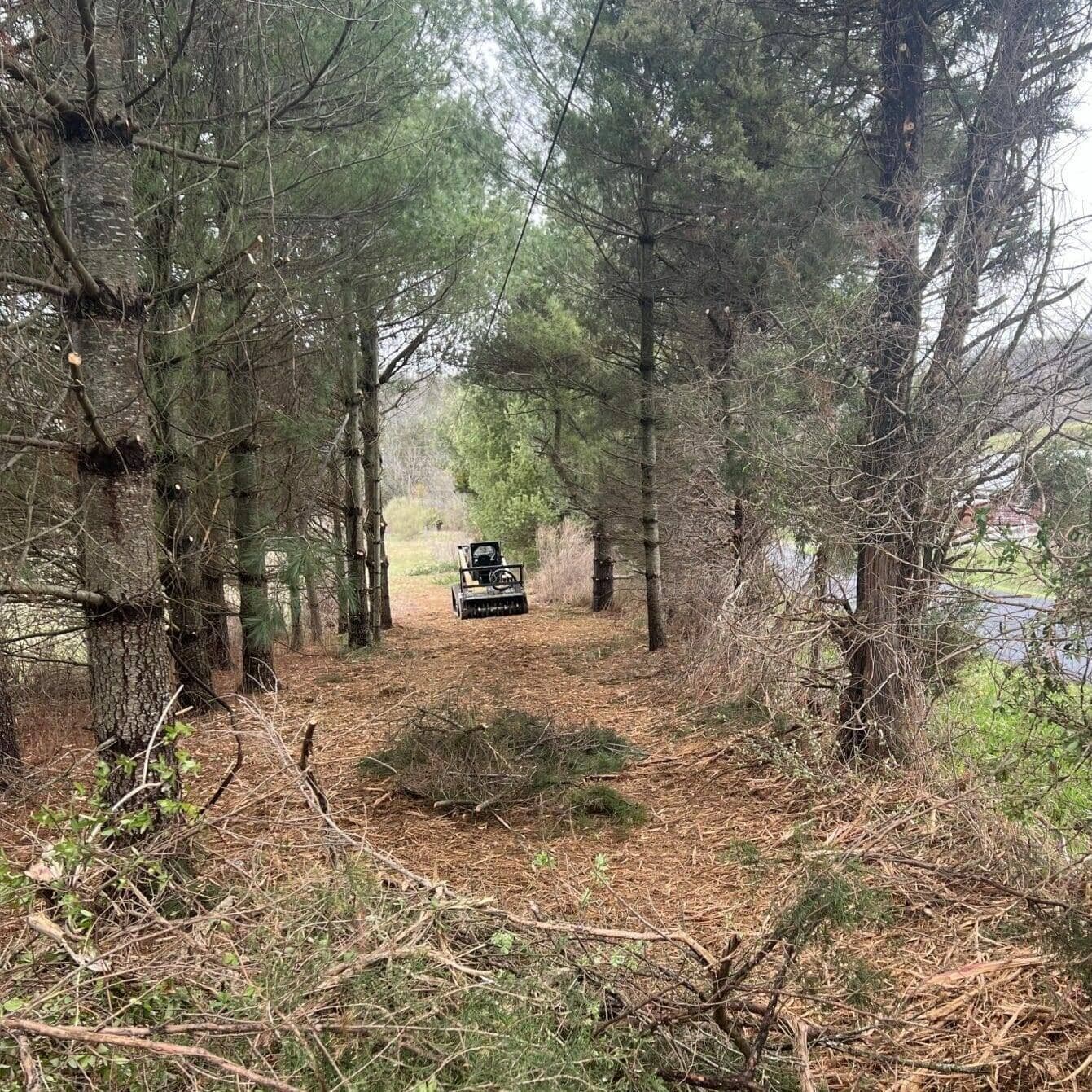
Overgrown land, invasive brush, and costly traditional clearing methods can make managing your property a challenge. If you own land in Richmond, Quinton, or Central Virginia, you know how difficult it is to clear dense vegetation without harming the environment or breaking the bank.
Forestry mulching offers a modern, eco-friendly solution that efficiently clears brush and small trees while enriching your soil. This technique uses specialized machinery to grind vegetation into mulch in a single pass, reducing waste and preserving the land’s natural balance.
In this article, you’ll learn how forestry mulching works, its benefits for Central Virginia properties, cost comparisons, common uses, and how to choose the right service. We’ll also cover important tips to avoid mistakes and explain when to call a professional for your land clearing needs.
Whether you’re tackling land clearing in Quinton, preparing a site in Richmond, or brush clearing anywhere in Central Virginia, this guide will help you make informed decisions for sustainable land management.
Forestry mulching in Richmond VA is a cost-effective, eco-friendly land clearing method that converts brush into nutrient-rich mulch in a single pass.
Key Takeaways:
Forestry mulching uses specialized equipment to grind vegetation into mulch in a single pass, clearing land efficiently without hauling debris away. The process involves a drum or disc mulcher attached to skid steers or tracked machines.
Typical machinery horsepower ranges from 75 to 300 HP, depending on vegetation density. These mulchers can clear brush up to 6-8 inches in diameter, including small trees and undergrowth.
On average, clearing one acre takes 4-8 hours, depending on how dense the vegetation is. This makes forestry mulching a fast and effective option for land clearing in Richmond, Quinton, and surrounding Central Virginia areas.
| Method | Cost/Acre | Time | Environmental Impact | Debris Removal |
|---|---|---|---|---|
| Forestry Mulching | $900-2000+ | 4-8 hours/acre | Low; mulch enriches soil, prevents erosion | No; mulch left on-site |
| Bush Hogging | $75-150 | 1-3 hours/acre | Low; cut material left on ground | No; debris remains on-site |
| Bulldozing | $1,200-2,000 | 1-2 days/acre | High; soil disturbance, erosion risk | Yes; debris hauled off-site |
| Hand Clearing | $1,000-1,500 | Several days/acre | Medium; selective but labor-intensive | Yes; debris hauled off-site |
| Controlled Burn | $500-1,000 | Hours | Medium; air pollution, risk of fire spread | No; ash remains on-site |
Costs vary significantly based on terrain, vegetation density, and site accessibility. The figures above reflect general Central Virginia ranges and should be treated as starting points rather than firm quotes. Forestry mulching in particular can run toward the higher end on properties with dense hardwoods, steep slopes, or rocky ground. Virginia also regulates controlled burns through the Department of Forestry, which requires a burn permit and restricts open burning between February 15 and April 30, it's generally not a practical DIY option and isn't a service Conner Tree Service offers. For an accurate estimate on your property, the best step is a site evaluation.
If your property has overgrown fields, tall grass, or light brush rather than dense trees and woody growth, bush hogging may be the more practical choice. A rotary cutter mounted to a tractor knocks down and chops up vegetation quickly and at a lower cost per acre than forestry mulching: making it well-suited for routine field maintenance, pasture clearing, or keeping fence lines clean.
The key difference is scale. Bush hogging works best where the growth is manageable: think tall weeds, briars, and saplings under a couple of inches in diameter. Forestry mulching handles the heavy lifting: dense overgrowth, established brush, trees up to 6–8 inches in diameter, and stumps. If you're not sure which service fits your property, our bush hogging page breaks down what the process covers and what to expect.
What people do wrong: Scheduling work after heavy rain or during spring thaw.
Why it's a problem: Equipment creates 6-12 inch ruts, compacts soil, and damages roots of trees you want to keep.
The right approach: Wait 3-5 days after rain; schedule work during dry months (June-October in Virginia).
What people do wrong: Starting clearing without calling 811 or marking utility lines.
Why it's a problem: Mulcher can sever gas, electric, or water lines; repair costs range from $2,000 to $10,000+.
The right approach: Call 811 at least 3 business days before work; mark all lines with flags.
What people do wrong: Clearing right up to tree trunks you want to preserve.
Why it's a problem: Damages bark, exposes roots, and increases disease risk by 40-60%.
The right approach: Maintain a 3-5 foot buffer around keeper trees; hand-clear within this zone.
What people do wrong: Mulching uniformly without considering water flow.
Why it's a problem: Creates standing water, kills grass, and breeds mosquitoes.
The right approach: Maintain natural drainage swales; create a 2-3% grade away from structures.
What people do wrong: Assuming mulched areas need no follow-up.
Why it's a problem: Invasive species regrow within 60-90 days without treatment.
The right approach: Apply selective herbicide 2-3 weeks post-mulching; monitor quarterly for the first year.
Forestry mulching offers you an eco-friendly, cost-effective way to clear land in Central Virginia while preserving topsoil and preventing erosion. This single-pass process converts brush and small trees into nutrient-rich mulch, eliminating debris removal and enriching your soil naturally.
Whether you need right-of-way clearing in Richmond, pasture reclamation in Quinton, or pre-construction site prep, professional forestry mulching delivers results in 1-3 days at 50-70% less cost than traditional methods.
For properties over 1/2 acre or vegetation exceeding 4 inches in diameter, professional equipment and expertise ensure safe, efficient clearing without soil compaction or utility damage.
Here at Conner Tree Service,we have provided forestry mulching and land management services across Central Virginia for over 20 years. Our certified arborists use state-of-the-art mulching equipment to clear your property while protecting the trees and landscape features you want to keep. Fill out our contact form or call (804) 489-7990 for a free property assessment and same-week scheduling.
Forestry mulching in Central Virginia typically costs $400-$600 per acre for light to moderate vegetation, and $600-$900 per acre for dense brush or small trees up to 6 inches in diameter. Factors affecting price include terrain slope, vegetation density, equipment access, and distance from the service provider’s base.
Forestry mulchers effectively clear brush and trees up to 6-8 inches in diameter, depending on equipment size. Trees larger than 8 inches require traditional removal with chainsaws and stump grinding. Most residential projects focus on undergrowth, invasive species, and small saplings rather than mature trees.
The mulch layer typically lasts 12-18 months before fully decomposing into the soil. During this time, it suppresses weed growth, retains soil moisture, and prevents erosion. For long-term control, apply selective herbicide 2-3 weeks after mulching and monitor quarterly for regrowth.
Yes, forestry mulching is safer, faster, and more environmentally friendly than controlled burning. Burning requires permits, poses fire risks, creates air pollution, and destroys topsoil nutrients. Mulching preserves soil structure, returns organic matter, and eliminates smoke and ash concerns.
The optimal time is June through October when ground conditions are driest. Avoid late winter through early spring (February-April) when soil is saturated from snowmelt and rain. Wet conditions cause equipment rutting, soil compaction, and project delays of 2-7 days waiting for drying.
Yes, professional operators maintain a 3-5 foot buffer zone around trees you want to preserve. Hand-clearing within this buffer prevents bark damage and root exposure. Communicate clearly with your contractor about which trees to protect before work begins.
Mulching grinds above-ground vegetation but does not kill roots. Many invasive species like multiflora rose and autumn olive resprout within 60-90 days. To prevent regrowth, apply selective herbicide to cut stumps and mulched areas 2-3 weeks after clearing, then monitor quarterly during the first year.
Most residential projects under 5 acres do not require permits, but regulations vary by county. Check with your local zoning office before starting. Permits may be needed near wetlands, streams, protected areas, or in homeowners associations with land use restrictions.
Serving Quinton, Richmond, James City, Williamsburg, Ashland, Chesterfield, Glen Allen, Hanover, Henrico, Manakin, Mechanicsville, Midlothian, New Kent, Powhatan, Tuckahoe, and surrounding Central Virginia area.
Free estimates, no obligation, and a straight answer about what the job actually needs.
