Storm damage? We take emergency calls.(804) 489-7990
Learn to identify the Emerald Ash Borer and implement effective strategies to protect your ash trees. Safeguard your landscape with expert guidance today!
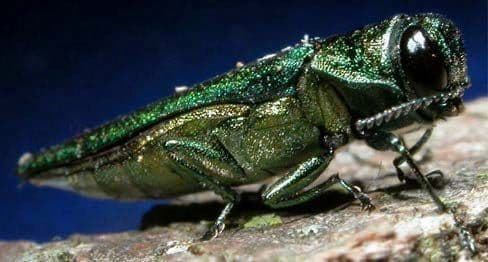
If you own property in Central Virginia with mature ash trees, you are likely standing on the front lines of a biological invasion. The Emerald Ash Borer (EAB), a small, metallic-green beetle native to Asia, has moved from a localized threat to a statewide crisis. Since its first detection in Virginia, the pest has spread so aggressively that the Virginia Department of Agriculture and Consumer Services (VDACS) recently expanded its quarantine to cover the entire Commonwealth.
The stakes for Virginia homeowners are high. Unlike many native pests that merely stress a tree, EAB is nearly 100% fatal to North American ash species if left untreated. In the Richmond metro area, we are seeing the impact firsthand, from confirmed infestations in Hanover County to the loss of urban canopy in the city's historic neighborhoods.
This guide provides the essential facts every Virginia landowner needs to know about EAB. You’ll learn how to identify the early warning signs of an attack, the specific treatment options available through state cost-share programs, and how to decide when a tree can be saved versus when it must be removed for safety.
The Emerald Ash Borer is now confirmed in every region of Virginia. Without proactive chemical treatment, infested ash trees typically die within 2–4 years.
For years, EAB was managed through localized quarantines. However, the beetle’s ability to hitchhike in firewood and nursery stock has led to a statewide presence. The recent detection of EAB in Hanover County, directly north of Richmond, was the final trigger for the statewide quarantine expansion.
The impact isn't limited to the Richmond suburbs. To our east, the Virginia Department of Conservation and Recreation (DCR) has confirmed green ash infections at Machicomoco State Park in Gloucester County. Further south, at Chippokes State Park in Surry County, the state has already moved into the treatment phase, using specialized insecticide injections to preserve high-value trees in public areas.
In the Richmond metro area, organizations like Reforest Richmond have launched awareness campaigns to help residents identify ash trees in the urban canopy before they become hazardous. If you have an ash tree on your property in Henrico, Chesterfield, or New Kent, the question is no longer if EAB will arrive, but when.
Identifying EAB in its early stages is difficult because the larvae do their damage hidden beneath the bark. By the time a homeowner notices significant canopy thinning, the tree may already be too far gone to save.
If you aren't sure if your tree's decline is due to EAB or another environmental factor, you can use our Step-by-Step Guide to Assessing Tree Health to help narrow down the cause.
The good news is that EAB is not an automatic death sentence if you act early. The Virginia Department of Forestry (DOF) describes chemical treatment as highly effective when applied to trees that are still relatively healthy.
The most common professional treatment involves injecting a systemic insecticide (typically emamectin benzoate) directly into the tree's vascular system. The tree then transports the chemical to the canopy, where it kills both the feeding larvae and the adult beetles.
To encourage the preservation of Virginia’s ash canopy, the DOF runs an EAB Treatment Cost-Share Program. This program helps private landowners offset the expense of professional injections for high-value ash trees. Applications typically open annually; we recommend checking the DOF website for the current cycle's deadlines and requirements.
While we always prefer to save a tree, there is a "point of no return" for EAB infestations. Once a tree has lost more than 30% of its upper canopy, the vascular system is usually too damaged to effectively transport insecticide, and the tree becomes a safety hazard.
Ash wood becomes extremely brittle very quickly after EAB kills the tree. Unlike oaks, which may stand for years after dying, ash trees are prone to "shattering", where large limbs or the entire trunk fail without warning. This makes removal significantly more dangerous and expensive if delayed.
If your tree has crossed the threshold into significant decline, it is important to understand the safety implications. You can learn more in our guide on How to Tell If a Tree Needs to Come Down.
What people do wrong: Waiting until the tree looks "sick" before calling an arborist.
Why it's a problem: Injections are a preventative measure. Once the larvae have "girdled" the tree by destroying the tissue under the bark, the tree can no longer move water or nutrients, and treatment will fail.
The right approach: If you have a high-value ash tree, start a preventative treatment cycle as soon as EAB is confirmed in your county.
What people do wrong: Assuming every hole in an ash tree is Emerald Ash Borer.
Why it's a problem: Virginia has several native borers (like the Ash/Privet Borer) that attack stressed trees but rarely kill them. Treating for EAB when you actually have a minor native pest is an unnecessary expense.
The right approach: Look at the exit hole. Native borers leave round or oval holes; EAB is the only one that leaves a distinct, flat-bottomed D-shaped hole.
What people do wrong: Applying hardware-store soil drench treatments to large, mature trees.
Why it's a problem: Soil drenches often lack the concentration needed to protect large trees and can have off-target effects on pollinators if not applied correctly.
The right approach: Professional trunk injections are more targeted, use less chemical overall, and provide much higher protection for mature trees.
The Emerald Ash Borer is a permanent part of the Virginia landscape, but it doesn't have to mean the end of every ash tree on your property. By identifying your ash trees now and deciding which ones are worth the investment of long-term protection, you can preserve the beauty and value of your Central Virginia landscape.
If you decide that removal is the best path forward, remember that the wood can still be put to use. Many homeowners find creative uses for tree stumps or use the wood for on-site heating (provided it stays on the property).
Serving Quinton, Richmond, Chesterfield, Williamsburg, Hanover, Henrico, New Kent, and the surrounding Central Virginia area. If you need an EAB assessment or professional treatment for your ash trees, we're happy to help, Contact Conner Tree Service today.
Serving Quinton, Richmond, Chesterfield, Williamsburg, Hanover, Henrico, New Kent, and surrounding Central Virginia area.
Ash trees have "opposite" branching (branches grow in pairs directly across from each other) and compound leaves with 5–9 leaflets. The bark on mature trees has a distinct diamond-shaped furrow pattern.
Professional trunk injections typically cost between $10 and $20 per inch of trunk diameter. A 20-inch tree might cost $200–$400 to treat every two years. This is often significantly cheaper than the cost of removing a large, dead ash tree.
Most arborists currently recommend against planting new ash trees in Virginia unless you are prepared to commit to a lifetime of chemical treatments. There are many excellent native alternatives, such as Maples, Oaks, or Elms.
The quarantine primarily restricts the movement of ash materials (logs, stumps, branches) and all hardwood firewood out of the state or into non-infested areas. To be safe, always follow the "Buy It Where You Burn It" rule for firewood.
EAB populations may dip if their primary food source disappears, but they can persist in low numbers on alternative hosts like White Fringetree. As long as there are ash saplings growing in our forests, EAB will likely remain a permanent resident of Virginia.
Free estimates, no obligation, and a straight answer about what the job actually needs.
