Land Clearing Permits: A Developer's Guide for Central VA
A developer's guide to land clearing permits, tree canopy rules, and buffer zone compliance across Henrico, Chesterfield, and Hanover County, Virginia.
Read Time: 10 min
Navigating commercial site prep in VA requires balancing aggressive construction schedules against an intricate framework of local zoning codes, environmental buffer mandates, and land disturbance regulations. Whether breaking ground on a residential subdivision in Chesterfield, an industrial park in Henrico, or clearing agricultural parcels in Hanover, an overlooked permit can lead to immediate stop-work orders, steep civil fines, and costly replanting bonds.
Securing land clearing permits in Richmond and the surrounding counties is not just a bureaucratic hurdle; it is a critical phase of site engineering. Each municipality enforces distinct land disturbance thresholds, tree canopy replacement percentages, and environmental buffer protections that dictate how timber can be removed and processed.
This comprehensive developer's checklist breaks down the specific municipal tree ordinances, environmental compliance protocols, and low-impact clearing strategies needed to keep your Central Virginia development compliant, on budget, and on schedule.
TL;DR / Quick Summary
Central Virginia jurisdictions regulate tree removal, land disturbance, and buffer zones through county-specific ordinances and state environmental acts.
Key Takeaways:
Land disturbance permits are generally required across Henrico, Chesterfield, and Hanover once clearing exceeds a set square-footage threshold.
Resource Protection Area (RPA) features require an unbreached 100-foot natural vegetative buffer under the Chesapeake Bay Preservation Act.
Henrico applies a multi-year tree canopy retention standard during Plan of Development (POD) review.
Chesterfield mandates preserved perimeter buffers along designated transportation corridors.
Hanover enforces Tree Save Area (TSA) barricades at drip-lines before clearing machinery can enter the site.
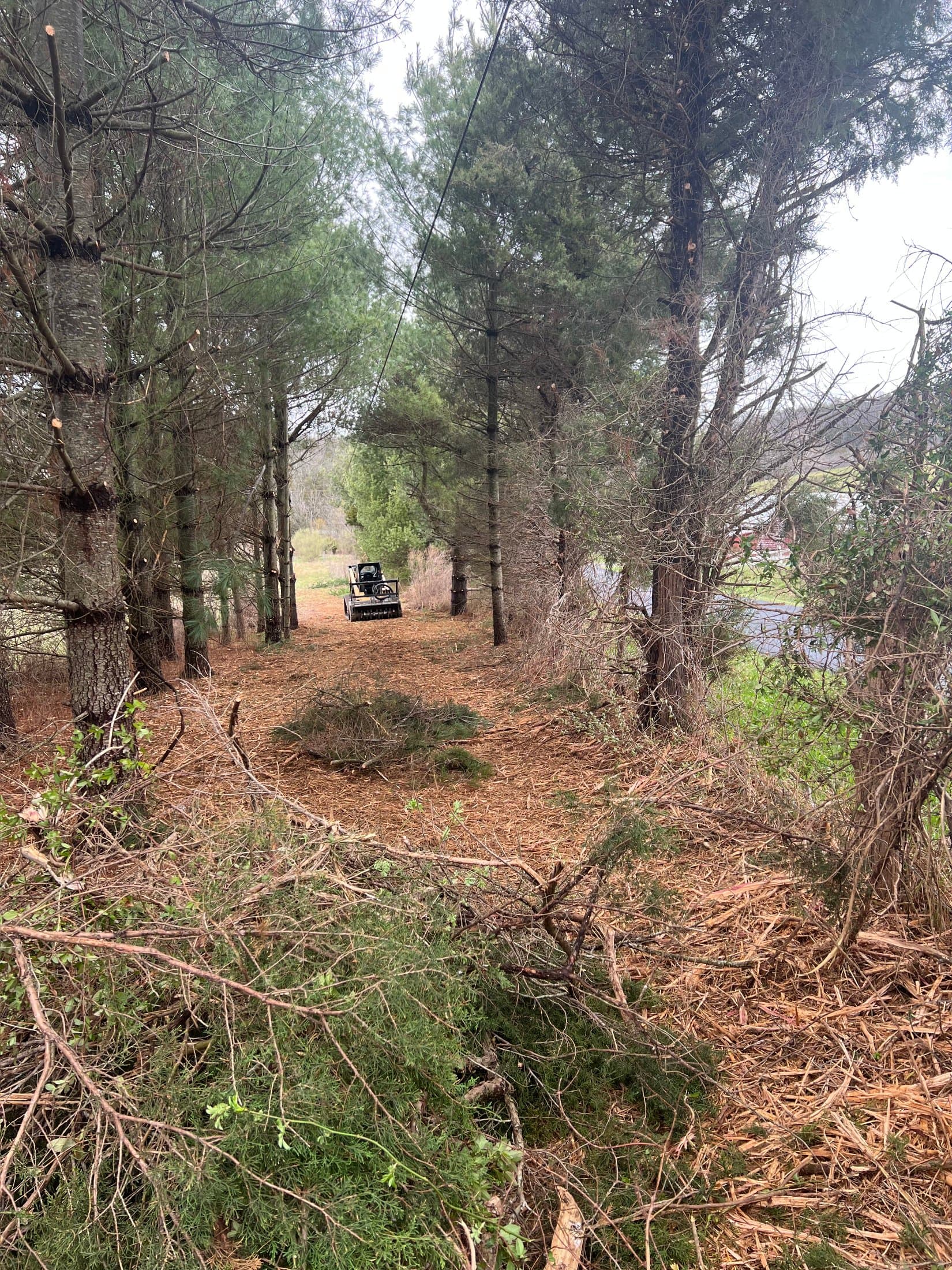
Forestry mulching prevents topsoil scraping, reducing sediment basin costs and erosion control violations.
Central Virginia Land Clearing Regulatory Framework
Clearing commercial or residential acreage across the Greater Richmond region involves three overlapping layers of regulatory oversight:
Local Municipal Ordinances: County-specific zoning ordinances governing tree preservation, landscape buffers, and tree canopy replacement.
The Chesapeake Bay Preservation Act (CBPA): State-mandated Resource Protection Areas (RPAs) and Resource Management Areas (RMAs) protecting sensitive watersheds Virginia DEQ Chesapeake Bay Preservation Act.
Erosion and Sediment Control (ESC) Laws: Virginia Department of Environmental Quality (DEQ) standards administered locally to prevent off-site siltation.
Failure to observe these boundaries before deploying heavy equipment can trigger substantial civil penalties assessed per day of violation.
County-by-County Permitting and Ordinance Breakdown
Each Central Virginia jurisdiction operates under its own regulatory priorities, inspection timelines, and tree preservation formulas.
Henrico County: Tree Protection & Plan of Development (POD) Standards
Henrico County enforces environmental reviews through its Department of Planning and Department of Public Works. Commercial development or multi-family projects must submit detailed Landscape and Tree Canopy Plans during the formal Plan of Development (POD) review.
Land Disturbance Permitting: Required once site activity crosses the county's disturbance threshold. A complete Erosion and Sediment Control (ESC) plan and performance bond must be posted before permit issuance.
Tree Canopy Retention Mandates: Commercial developments must meet a minimum long-term tree canopy coverage standard upon project completion.
Transitional Buffer Requirements: Transitional buffers are enforced between incompatible zoning classifications (such as commercial parcels adjacent to residential neighborhoods), requiring preserved existing mature timber stands or engineered vegetative replacement screens.
Chesterfield County: Tree Removal Regulations & Corridor Preservation
Tree removal regulations in Chesterfield prioritize watershed protection within the James and Appomattox River basins alongside visual corridor aesthetics.
Thoroughfare & Perimeter Buffers: Chesterfield mandates natural vegetative buffers along major thoroughfares (such as Route 288, Midlothian Turnpike, and Iron Bridge Road), with preserved healthy mature trees incorporated into site layouts.
Tree Preservation: Chesterfield County requires site and construction plans to account for the preservation of Mature Trees. These trees must be protected via dedicated Root Protection Zones during construction and can only be removed if necessary for development. Preserved trees grant developers credits toward meeting Chesterfield's countywide minimum 20-year tree canopy percentage standards.
Stream Buffer Enforcement: The county audits 100-foot RPA buffers along perennial streams, prohibiting clearing, grading, and motorized equipment operation without formal environmental exceptions.
Hanover County: Tree Ordinances & Agricultural Limits
Hanover County balances rapid commercial development along the I-95 and Route 301 corridors with expansive rural conservation zones.
Tree Save Areas (TSA): Hanover requires commercial developers to clearly delineate Tree Save Areas on construction drawings and erect barricades before site grading begins.
Agricultural Clearing Exemptions: Land clearing strictly for agricultural production is exempt under Virginia Code, provided the parcel is not converted to residential or commercial use within a defined window. Conversion within that window triggers retroactive permitting fines and bonding.
Environmental Buffer Compliance: Hanover requires preservation of natural vegetation along designated scenic corridors and wetland boundaries.
The Developer's Pre-Clearing Compliance Roadmap
Navigating regulatory approvals requires an orderly, phased process. Skipping sequential environmental steps often voids previously submitted engineering approvals.
Environmental Delineation: Commission a certified environmental consultant to map wetlands, perennial water bodies, and 100-foot RPA buffer zones.
Tree Canopy & Specimen Survey: Identify boundary lines, calculate existing tree canopy coverage, and map mature hardwood stands to fulfill county tree retention quotas.
Plan of Development (POD) Submission: Submit comprehensive clearing limits, landscape plans, and preservation areas to the county planning commission.
Erosion & Sediment Control (ESC) Permitting: Secure land disturbance permits and post required municipal performance bonds with county building officials.
Drip-Line Barricade Installation: Erect high-visibility safety fencing around the Critical Root Zones (CRZ) of all preserved trees before mobilizing machinery.
Deploy Selective Low-Impact Clearing: Use precision clearing and forestry mulching to clear road right-of-ways and building pads without encroaching on protected zones.
Protecting Critical Root Zones (CRZ) and Environmental Buffers
Buffer violations are among the fastest ways to invite regulatory shutdown. Understanding the biological limits of preserved trees is just as important as reading civil drawings.
Understanding the 100-Foot RPA Buffer
Under the Chesapeake Bay Preservation Act, a 100-foot vegetated buffer must remain undisturbed alongside perennial streams and contiguous wetlands. No grading, grubbing, or heavy machinery transit is permitted within this zone without an approved Water Quality Impact Assessment (WQIA).
The Danger of Root Zone Compaction
A tree's Critical Root Zone (CRZ) extends outward to its drip line, the outermost circumference of the tree canopy. Most feeder roots live within the top 12 to 18 inches of soil.
Operating heavy bulldozers or excavators across the CRZ crushes soil pores, cutting off oxygen and water exchange.
Stockpiling fill dirt or timber debris over root plates can suffocate trees, often leading to progressive crown dieback and decline over the following several years.
Selective Buffer Management
When dead, diseased, or hazardous trees inside a preserved buffer threaten proposed structures, selective removal is permitted under county guidelines. Specialized low-ground-pressure machinery or tree-climbing crews should be used to dismantle trees without disturbing underlying topsoil.
Why Forestry Mulching is the Superior Commercial Clearing Method
Traditional land clearing relies on bulldozers to push over standing timber and grub root balls out of the earth. This process strips topsoil, increases erosion risk, and creates debris piles that require disposal or open-burn permits.
Modern commercial contractors increasingly specify forestry mulching for access roads, boundary clearings, and pre-construction prep:
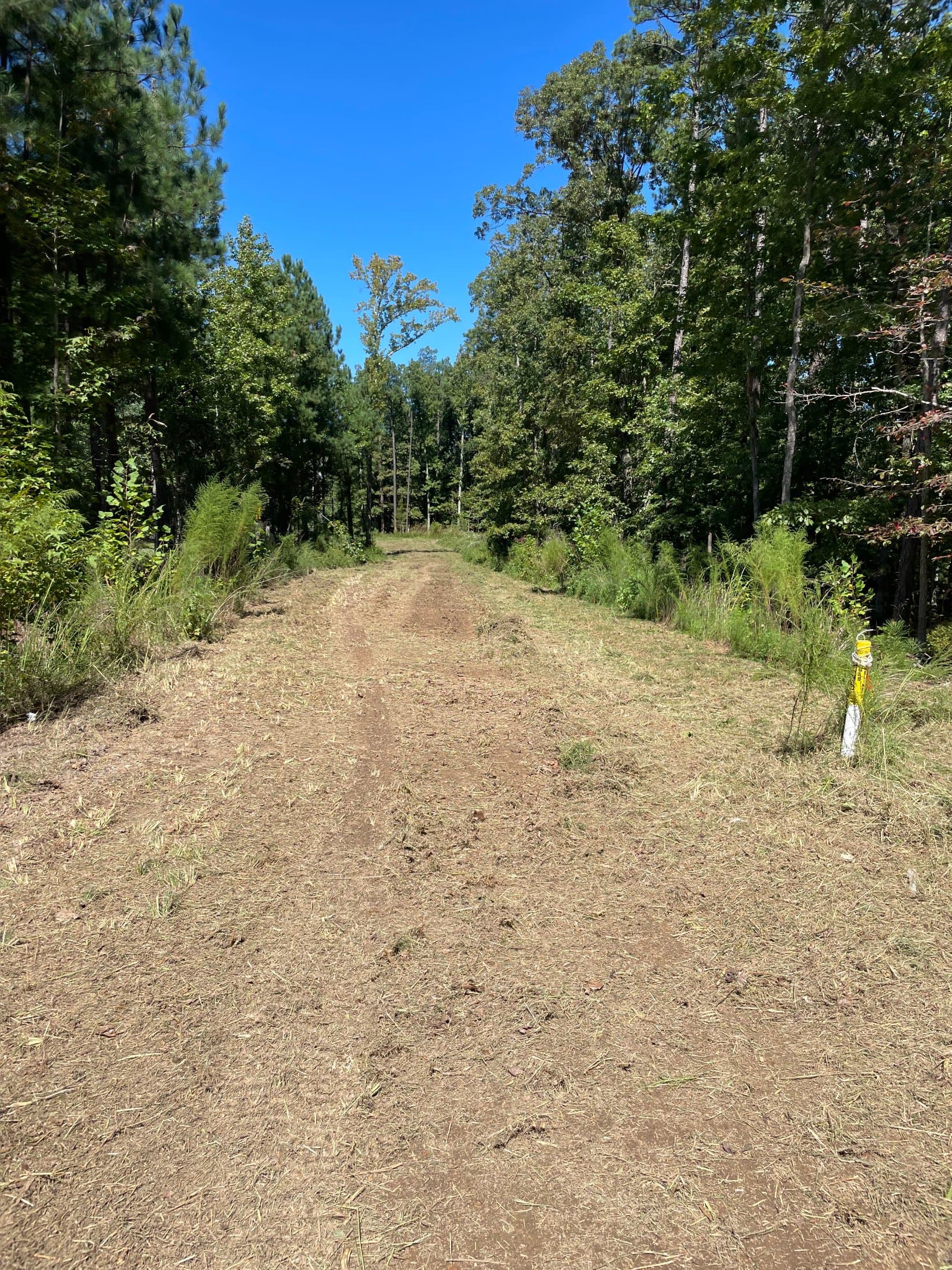
Zero Topsoil Disturbance: Rotary drum mulchers shred brush, saplings, and standing timber flush with the ground, leaving root structures intact to anchor subsoil.
Built-In Erosion Blanket: Processed organic mulch forms a protective mat across the site, stabilizing soil and reducing silt fence blowouts.
Precision Boundary Clearing: Mulching equipment can work close to designated Tree Save fences without tearing the lateral root systems of preserved canopy trees.
Elimination of Haul-Off & Burn Permitting: Processing timber on-site reduces trucking fees, road cleanup liabilities, and exposure to seasonal burn bans active across Henrico, Chesterfield, and Hanover.
Our forestry mulcher allows us to clear commercial access ways and boundary easements efficiently while keeping your site aligned with local ESC guidelines.
What You Can Handle vs. When to Call a Pro
Tasks Most Property Owners Can Do
Walk the property and photograph existing tree canopy and site conditions before any clearing begins: Creates a useful record for permit applications and protects you if a boundary or canopy dispute comes up later.
Pull publicly available zoning and ordinance information for your parcel before hiring a contractor: Helps you ask informed questions and spot a contractor who isn't accounting for local requirements.
Flag obvious specimen or landmark trees for discussion with your contractor or the county: A quick visual check for large, mature hardwoods near the clearing line helps surface potential preservation requirements early.
Tasks for Confident DIYers
Clearing brush or small saplings well outside any RPA, TSA, or transitional buffer, once a permit is already in hand: Requires a clear, marked understanding of where protected zones start, GPS coordinates or staked buffer lines from your environmental consultant, not a visual guess.
Installing your own temporary fencing to mark a Tree Save Area boundary ahead of a contractor walkthrough: Straightforward with stakes and high-visibility fencing, but should still be checked against the county-approved site plan before machinery arrives.
When to Call a Professional
Any work inside or near an RPA, CRZ, or designated buffer: These zones carry legal restrictions and biological risk that require a certified environmental consultant or arborist to assess correctly.
Tree canopy surveys and specimen tree delineation for a POD submission: Counties require documentation from a qualified professional; a homeowner or developer's own measurements won't satisfy the permitting requirement.
Removing dead, diseased, or hazardous trees located inside a preserved buffer: Requires low-ground-pressure equipment or a tree-climbing crew to avoid disturbing protected topsoil and root systems.
Red flags requiring immediate professional attention: a stop-work order or violation notice from the county, visible equipment tracks or grading inside a marked buffer or Tree Save Area, a specimen tree showing sudden crown dieback near a structure, or any uncertainty about where a protected boundary actually sits before machinery mobilizes.
Common Municipal Clearing Mistakes to Avoid
Avoiding these frequent compliance traps saves weeks of administrative delay and significant restoration expense.
1. Clearing Timber Prior to Land Disturbance Permit Approval
What people do wrong: Logging or clearing underbrush before civil plans and ESC permits are formally signed off by the county.
Why it's a problem: County inspectors treat unauthorized clearing as an illegal land disturbance violation, resulting in immediate Stop Work orders and maximum civil penalties.
The right approach: Maintain all existing vegetation on-site until the land disturbance permit is physically issued and pre-construction meetings are completed.
2. Storing Equipment Inside Tree Save Areas (TSA)
What people do wrong: Using designated tree preservation zones as temporary staging yards for heavy machinery, gravel, or soil stockpiles.
Why it's a problem: Soil compaction can kill preserved canopy trees, resulting in forfeited landscape bonds and mandatory post-construction replanting.
The right approach: Keep all heavy equipment, fuel storage, and construction materials strictly outside the protective barricade fencing.
3. Breaching the 100-Foot RPA Boundary with Heavy Machinery
What people do wrong: Allowing excavator tracks or skid steers to enter designated RPA stream buffers to pull down trees or clear brush.
Why it's a problem: This can trigger direct environmental enforcement from both the county and the Virginia DEQ, often requiring engineered stream bank restoration and environmental mitigation.
The right approach: Hand-fell hazardous timber in buffer areas or use long-reach crane equipment positioned outside the 100-foot buffer line.
Conclusion
Successfully managing land clearing and site preparation across Central Virginia requires strict adherence to local ordinances, proactive environmental buffer protection, and smart equipment selection. Partnering with a qualified commercial tree care and land clearing specialist early in the planning cycle helps protect your capital investment and keep your site preparation on schedule.
If you are planning a commercial development, residential subdivision, or infrastructure expansion in Henrico, Chesterfield, or Hanover County, contact Conner Tree Service today to discuss your site clearing, forestry mulching, and tree preservation needs or request an estimate on our website.
Serving Quinton, Richmond, Chesterfield, James City, Williamsburg, Hanover, Henrico, New Kent, Powhatan, Tuckahoe, Glen Allen, Midlothian, Mechanicsville, Ashland, and surrounding Central Virginia areas.
Frequently Asked Questions
Do I need a permit to clear trees on commercial property in Central Virginia?
Yes, commercial tree clearing generally requires municipal permits, but the exact legal threshold and rules vary by county and the purpose of the clearing.
What is a Resource Protection Area (RPA) buffer in Virginia?
A Resource Protection Area (RPA) is a state-regulated 100-foot vegetative buffer surrounding perennial streams, wetlands, and water bodies draining into the Chesapeake Bay watershed. Under the Chesapeake Bay Preservation Act, no motorized clearing, grading, or development can occur within this 100-foot zone without a formal Water Quality Impact Assessment (WQIA) and county board approval.
Can forestry mulching be done without a land disturbance permit?
Forestry mulching often benefits from distinct regulatory considerations because it does not scrape topsoil or uproot root systems. However, if it's part of an overall development project or exceeds county disturbance thresholds, it must be included in your site's overall ESC and clearing plan. Always verify with your county's environmental management department before beginning work.
What are the tree canopy requirements for commercial developments in Henrico County?
Henrico County zoning requires commercial developments to meet a long-term tree canopy coverage standard, with the exact percentage depending on the zoning district.
How does Chesterfield County enforce buffer zones between commercial and residential properties?
Chesterfield County enforces transitional buffer requirements along property boundaries where commercial developments border residential zones. These buffers typically require either preservation of existing mature woodland canopy or installation of dense evergreen screening for visual and auditory separation.
What happens if a contractor accidentally cuts down trees in a designated Tree Save Area?
Cutting down trees in a designated Tree Save Area violates local zoning conditions and ESC permits. Penalties can include stop-work orders, forfeiture of posted landscape performance bonds, municipal civil fines, and mandatory replanting, often at ratios requiring multiple replacement trees per inch of caliper destroyed.