Storm damage? We take emergency calls.(804) 489-7990
Stump grinding before winter lets Richmond homeowners beat the spring rush and seed on time. Learn when to grind, how to backfill, and when to call a pro.
Read Time: 12 min
Leaving a tree stump in your yard through the winter rarely feels urgent until April arrives. Many homeowners across Central Virginia assume that once a tree comes down, the stump can wait for warm weather. But putting off stump grinding before winter often means waiting in line during the spring rush and missing the best window to reseed your lawn.
For most Richmond-area lawns, timing matters more than people expect. Tall fescue, the region's most common lawn grass, establishes best from seed in early fall, while spring seedings face summer heat before their roots are deep. Getting stumps ground in the fall lets you plan around that calendar instead of fighting it.
In this guide, you'll learn how to time stump grinding around your lawn, what fall conditions mean for equipment and turf, how to backfill the site so it doesn't sink, and which parts of the job are safe to handle yourself.
Grinding stumps in the fall puts you ahead of the spring backlog, lines up reseeding with tall fescue's best growing window, and gives the site time to settle before spring projects.
Key Takeaways:
The best time to grind a stump depends on what you want growing in that spot next. In the Richmond area, that usually means tall fescue, a cool-season grass that grows actively in fall and spring and struggles in summer heat.
If the stump is ground by late September or early October, you can usually backfill and seed the spot before cool weather slows growth. Seedlings then get a fall and a spring to build roots before their first summer. That timing lines up with Virginia Cooperative Extension's general guidance for seeding tall fescue.
Late Fall and Winter: Grind Now, Seed in Spring
Stumps ground from late October through winter are best backfilled and left to settle. Seed or lay sod in early to mid-spring, once the soil warms enough for germination. Spring seedings can succeed with steady watering, but expect to nurse them through their first summer.
Warm-season grasses like Bermuda and zoysia do go dormant in fall and are planted in late spring or early summer. If your lawn is one of these, a fall grind still gives the site months to settle before planting season.
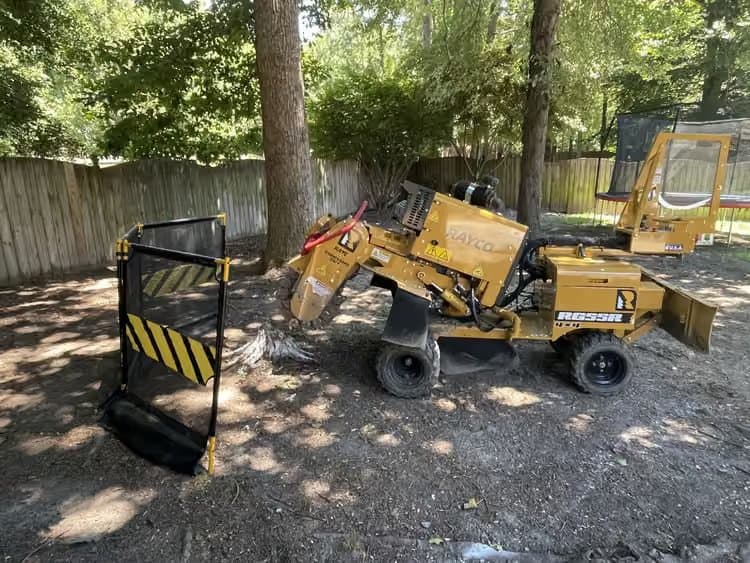
Stump grinders range from compact walk-behind units weighing a few hundred pounds to tracked and tow-behind machines weighing several tons. Any of them can leave ruts or compacted soil on saturated ground, especially in the clay-heavy soils common across much of the region.
Fall often brings firmer ground than late winter and early spring, when cool temperatures keep soil wet longer. That isn't guaranteed, since tropical storm remnants can soak Central Virginia in September. A good crew checks conditions and reschedules rather than rutting a soggy lawn.
A decaying stump is a long-term food source and shelter for wood-feeding insects and fungi. That risk isn't seasonal, but it matters most when the stump sits close to your house, deck, or garage.
Grinding removes the stump and the bulk of the root flare, which takes away the biggest food source and shelter. It doesn't remove every root. Roots below grinding depth decay over several years, so keep fresh chips and mulch away from your foundation. If a tree died of a root disease like Armillaria, ask about removing more of the root system before replanting nearby.
Avoiding the Spring Contractor Rush
Spring is one of the busiest seasons for tree care and landscaping companies in the Richmond region. Between March and May, schedules fill with storm cleanup, pruning, and clearing projects.
Waiting until spring can delay the rest of your plans:
Getting stump grinding done between October and December crosses a major site-prep task off your list before spring crews are booked.
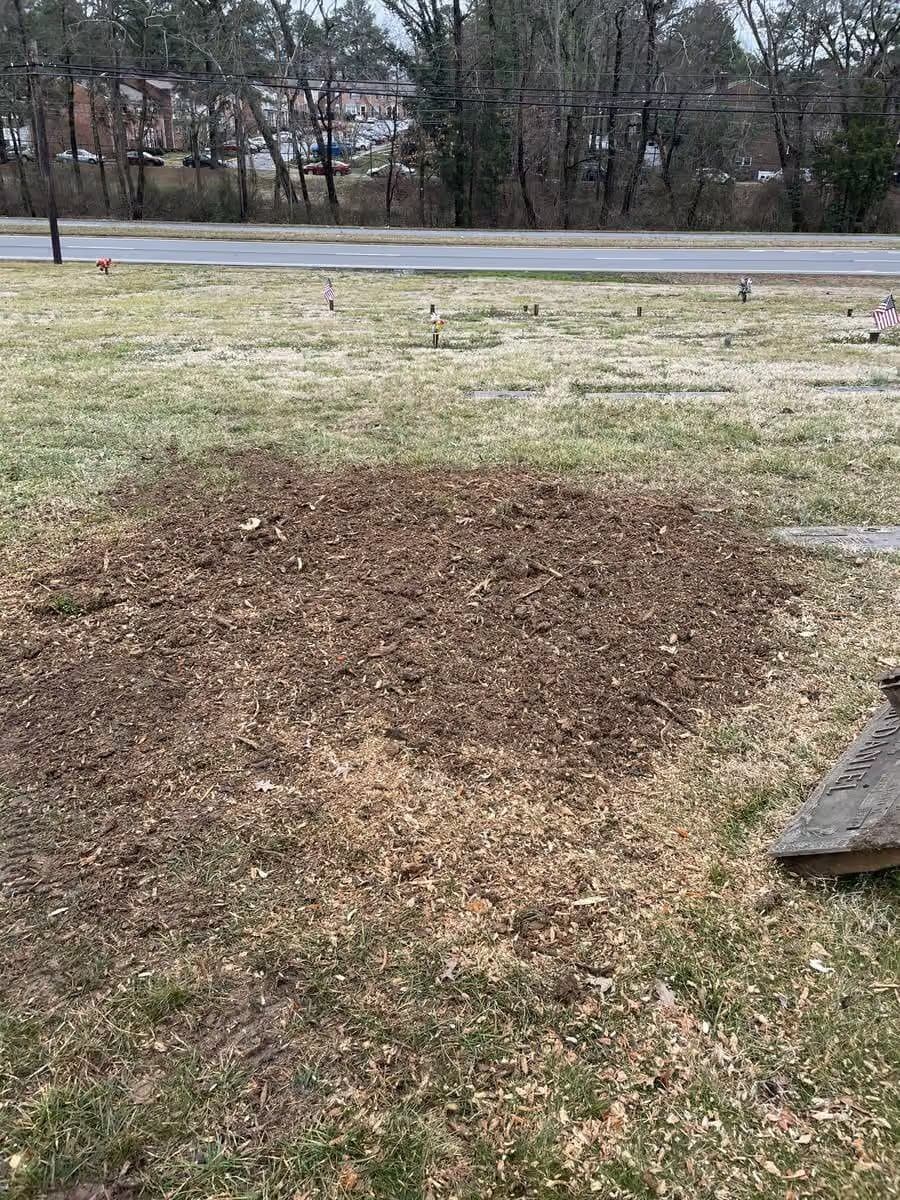
Grinding leaves a hole filled with wood chips, loosened soil, and severed roots. If you seed or sod right over it, the site can sink as the chips settle and break down, leaving a dip in your lawn.
Fresh chips tie up soil nitrogen as they decompose, which can starve grass planted over them. Remove most of the grindings from the hole and use them as mulch in beds or paths, away from your foundation.
Fill the cavity with a blend of topsoil and compost, mounding it slightly above grade. The mound allows for settling as the soil firms up.
Winter rain and time help the backfill settle before spring. When you're ready to plant, add topsoil to any low areas, then seed or lay sod. Large roots below grade keep decaying for years, so plan to top-dress small dips as they appear.
If you have several stumps, grinding them in one visit is usually more efficient than separate trips. For larger properties with brush and many stumps, land clearing may be the better fit.
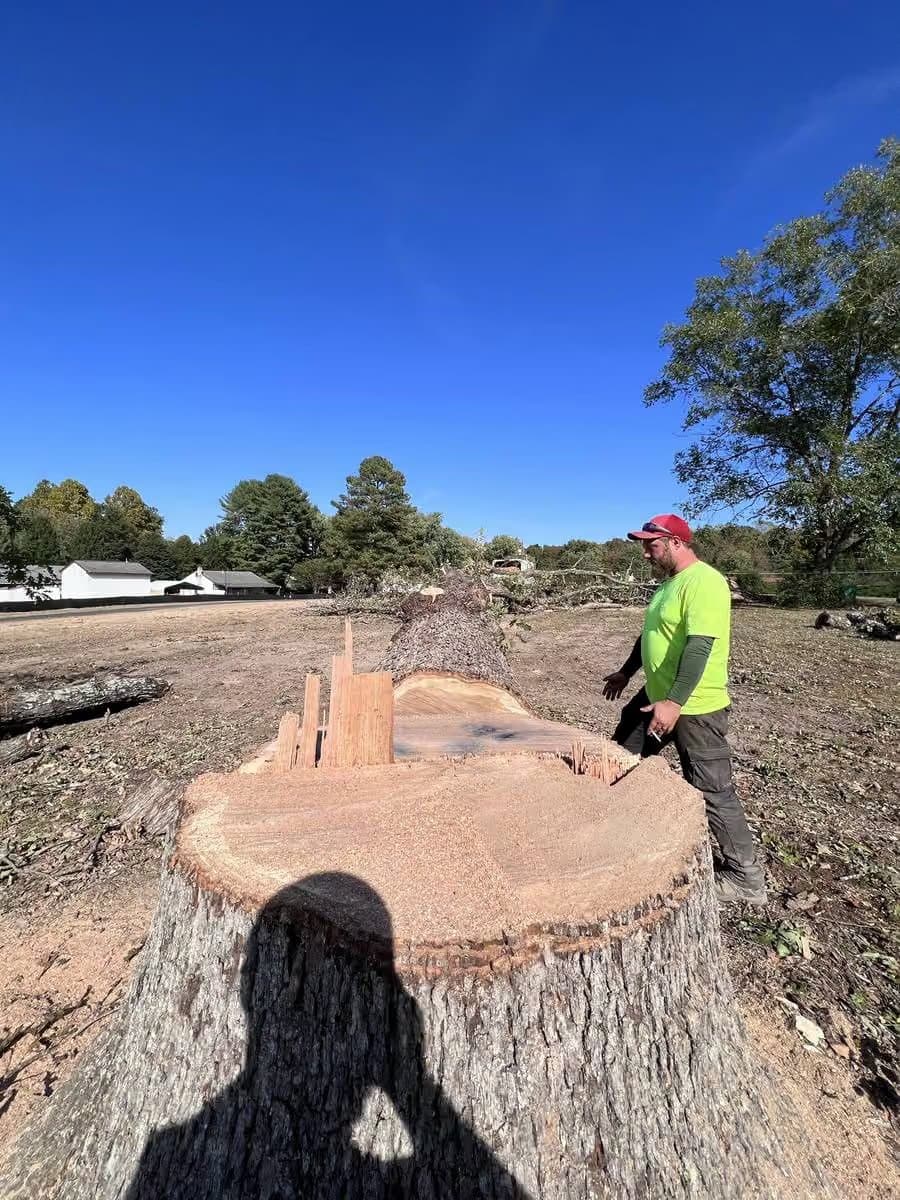
Stump grinding is one of the few tree jobs homeowners commonly take on themselves, since rental grinders are widely available. Some of the work is very manageable. Some is better left to a crew with larger equipment.
If you're not sure which category your stump falls into, we're happy to take a look.
What people do wrong: Cutting a tree flush to the ground and assuming the stump will rot away on its own.
Why it's a problem: Large hardwood stumps often take a decade or more to break down, depending on species and size. Meanwhile the stump is a tripping and mower hazard, and many species, such as sweetgum, maples, and black locust, keep sending up sprouts.
The right approach: Grind the stump 6 to 10 inches below grade so topsoil can cover the site and grass can grow over it.
What people do wrong: Drilling holes in the stump in late fall and filling them with a potassium nitrate stump remover, expecting it to be gone by spring.
Why it's a problem: These products depend on decay, and decay slows dramatically in cold soil. Even in warm weather, a treated stump can take many months to soften. The product also needs to be stored and applied according to its label, away from children and pets.
The right approach: Grind the stump mechanically for immediate results, with no chemicals left in your yard.
What people do wrong: Shoveling fresh wood chips back into the hole and laying sod directly on top.
Why it's a problem: Decomposing chips tie up soil nitrogen, so sod laid over them often struggles and yellows. The chips also settle unevenly, leaving a dip.
The right approach: Remove most of the chips, backfill with topsoil and compost, and let the site settle before planting.
Scheduling stump grinding before winter lets you plan around your lawn instead of the spring calendar. Grind early in fall and you can often reseed the same season. Grind later and the site has all winter to settle. Either way, you avoid waiting for a crew in spring.
Removing stumps near your home also takes away a long-term food source for termites and decay fungi. Proper backfilling keeps the spot level when you're ready to plant.
If you have old stumps or recently felled trees, we're glad to evaluate your site and recommend the right timing. Contact our team to schedule your fall stump grinding.
Serving Richmond, Henrico, Chesterfield, Hanover, Mechanicsville, Glen Allen, Midlothian, and surrounding Central Virginia areas.
Yes. In the Richmond area the ground rarely stays frozen for long, so stump grinding can usually be done year-round. Short frozen spells or saturated ground can delay a job. Stumps ground in winter are best backfilled and left to settle until spring seeding.
Most residential stumps are ground 6 to 10 inches below the surrounding grade, enough to cover the site with topsoil and grow grass. Surface roots that run outward from the stump may need to be ground separately. If you plan to plant a tree or pour concrete in the spot, ask for deeper grinding.
Use them as mulch in garden beds, on paths, or around trees, kept a few inches from trunks and away from your foundation. Don't use raw chips to fill the hole if you plan to grow grass there. Fill the cavity with topsoil and compost instead.
Usually not, but some species can sprout from remaining roots for a season or two. Sweetgum, black locust, tree-of-heaven, and some maples are common culprits. Clipping sprouts as they appear eventually exhausts the roots. Remaining roots decay over several years, which can cause minor settling in the lawn.
Stump grinding cost depends on the stump's diameter, species, root spread, site access, and how many stumps you have. Grinding several stumps in one visit is usually more economical per stump.
Can I plant a new tree where a stump was just ground?
It's best to plant a few feet away from the old stump rather than in the same spot. Buried chips tie up nitrogen, and old roots make digging difficult. If you want a tree in the exact spot, have the chips removed, backfill with good soil, and give the site time to settle.
Free estimates, no obligation, and a straight answer about what the job actually needs.
