Storm damage? We take emergency calls.(804) 489-7990
Planning a home renovation is an exciting milestone. Whether you are building a spacious new home addition, installing an inground pool for hot Virginia summers, or expanding your driveway to…
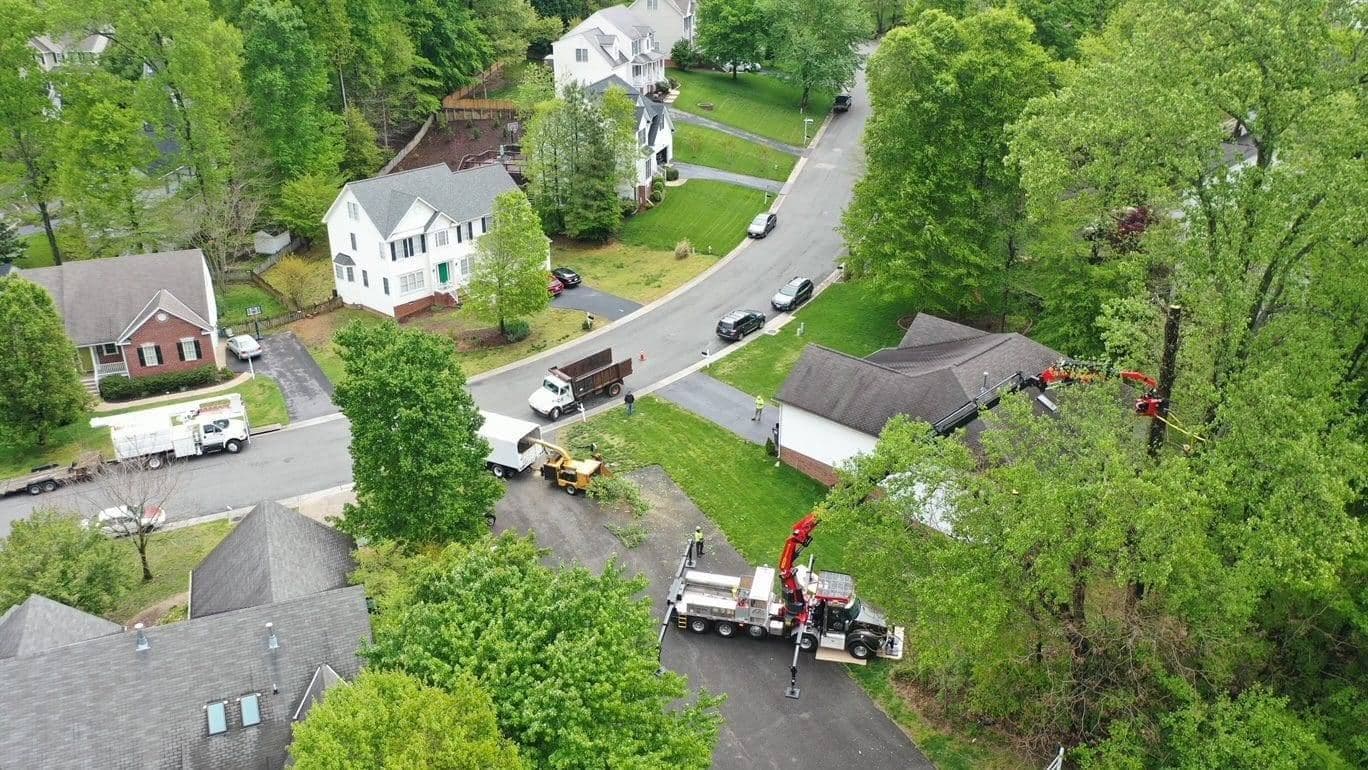
Planning a home renovation is an exciting milestone. Whether you are building a spacious new home addition, installing an inground pool for hot Virginia summers, or expanding your driveway to accommodate a growing family, these projects transform how you live on your property. However, in the wooded landscapes of Central Virginia, home expansions almost always run headfirst into mature trees.
Many homeowners assume they can simply build around existing trees or that a tree standing a few feet outside the construction footprint will remain perfectly healthy. Unfortunately, construction activities, such as grading, heavy machinery traffic, and foundation excavation, can cause severe, irreversible damage to a tree's root system and structural integrity. Understanding when a tree genuinely needs to come down versus when strategic trimming can resolve the conflict is essential to keeping your project on schedule, on budget, and safe.
Before your contractor breaks ground, you must evaluate how your construction plans will impact your landscape. In this guide, we will walk you through the critical signs of root and canopy conflicts, explain how to choose between tree trimming and full removal, and outline why timing these services before permits are finalized is the smartest move you can make.
Determining whether to remove or trim trees before a home renovation prevents costly structural damage, project delays, and future safety hazards on your property.
Key Takeaways:
To the untrained eye, a tree standing ten feet away from a proposed home addition looks perfectly safe. However, underground, a silent conflict is brewing. A tree’s root system is its lifeline, providing both structural stability and the water and nutrients required for survival.
The most critical concept in pre-construction planning is the Critical Root Zone (CRZ), sometimes called the root protection zone. A tree's root system is shallow, mostly residing in the top 12 to 18 inches of soil, and extends horizontally far beyond the trunk.
To find the exact boundary of this sensitive zone, arborists use a standard formula based on the tree's Diameter at Breast Height (DBH). For every 1 inch of trunk diameter (measured 4.5 feet above the ground), you must protect a 1 to 1.5-foot radius of soil surrounding the tree. For example, a mature oak with a 20-inch trunk diameter has a Critical Root Zone radius of 20 to 30 feet in all directions.
When construction crews excavate for a foundation, trench for utility lines, or grade soil for a new driveway within this radius, they sever these vital roots. If excavation cuts through major structural roots close to the trunk, the tree loses its physical anchor, turning it into an immediate fall hazard. Furthermore, the heavy machinery used during renovations, such as skid steers, dump trucks, and concrete mixers, compacts the soil. Soil compaction squeezes out the pore spaces that hold oxygen and water, effectively suffocating the remaining root system.
Above ground, physical space is the primary concern. Mature oaks, maples, and pines across Richmond and New Kent often have massive, spreading canopies. If a new home addition or roofline physically intersects with major limbs, those limbs cannot simply be hacked back without consequences. Removing large, structural branches opens up massive wounds that are highly susceptible to decay and wood-boring pests, ultimately compromising the tree's long-term health.
Additionally, trees naturally sway in high winds. If a newly built structure is placed too close to a mature canopy, branches will repeatedly strike the siding, gutters, and roofing during storms, leading to expensive property damage.
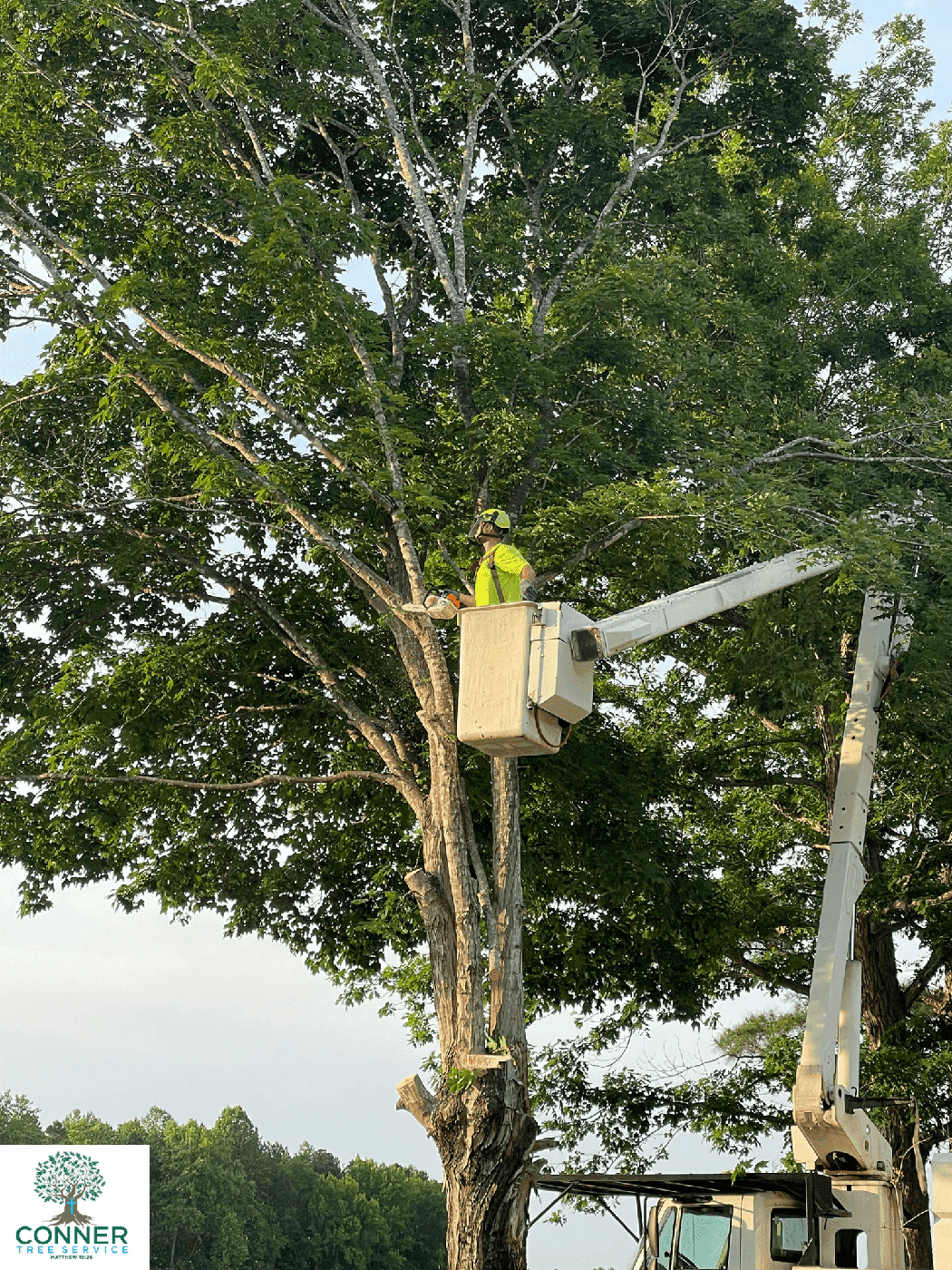
Determining whether a tree can be saved through strategic pruning or if it must be completely removed requires a careful balance of biology and structural engineering.
If the construction footprint only minimally overlaps with the outer edge of the tree's canopy, professional Tree Trimming is often the ideal solution. Our team can perform directional pruning to clear branches away from the future roofline or siding. This process involves:
Trimming is highly effective when the tree is young, vigorous, and belongs to a species that tolerates pruning well.
Unfortunately, preservation is not always viable. You must opt for professional Tree Removal if your project meets any of the following criteria:
While Central Virginia homeowners pride themselves on their hands-on approach to property maintenance, tree removal near homes, power lines, and active construction zones is strictly a professional-only task.
Felling a tree requires advanced knowledge of physics, wood biology, and rigging techniques. When a tree is located close to a house, deck, or neighboring property, there is zero margin for error. An improper cut can cause the tree to kick back off the stump, split unexpectedly (known as "barber-chairing"), or fall in an unintended direction, resulting in catastrophic structural damage or fatal injuries.
Furthermore, professional tree care companies carry comprehensive liability and workers' compensation insurance specifically tailored for high-risk tree work. Attempting to remove a large tree yourself not only puts your life at risk but can also void your homeowner's insurance policy if damage occurs during an uncertified DIY attempt. For your safety and peace of mind, always leave structural removals to licensed, insured professionals who utilize specialized rigging, cranes, and aerial lifts.
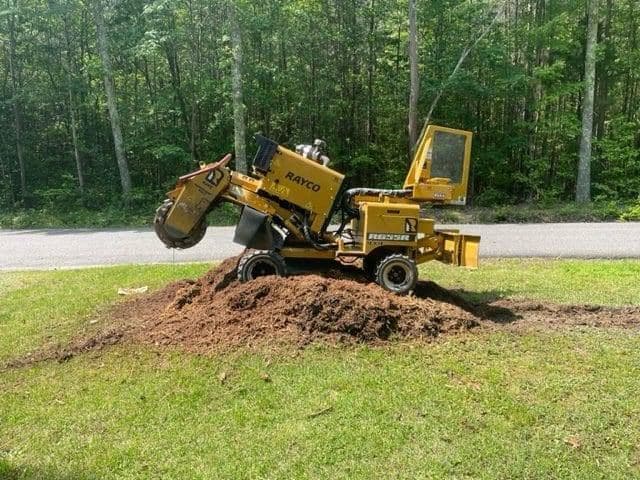
Once a tree is safely cut down, the job is only half complete. Leaving the stump behind in an active construction zone is a recipe for future headaches.
Professional Stump Grinding is the natural and necessary follow-up to any construction-related tree removal. Using powerful, specialized machinery, we grind the stump down 12 to 18 inches below the soil grade, completely pulverizing the heavy root flare.
The stumps homeowners might regret leaving are the ones closest to the foundation, as they inevitably complicate utility trenching and grading.
If you skip stump grinding, you run several major risks:
In the world of home remodeling, sequence is everything. One of the most common mistakes homeowners make is waiting until their building permits are approved and construction crews are on-site before addressing their trees.
Many municipalities across Central Virginia, including Henrico, Hanover, and Chesterfield counties, have specific tree canopy preservation ordinances or resource protection area (RPA) guidelines. If your renovation plans require clearing trees, these details must often be disclosed on your site plans during the permitting phase.
By bringing in a professional tree service early, we can provide accurate assessments of which trees must be removed and which can be saved. This proactive approach prevents your permit applications from being flagged or delayed by local building departments.
If a construction crew arrives on-site and realizes a massive oak is blocking their excavation path, your entire project grinds to a halt. You will have to scramble to find an available tree service, and your general contractor may charge you "standby fees" for idle labor and rented machinery.
Removing trees and completing Stump Grinding before any building materials or heavy equipment arrive ensures your contractors have a clean, safe, and completely unobstructed workspace from day one. It also protects the trees you do want to keep, as we can establish clear physical barriers around their Critical Root Zones before work begins.
Evaluating your landscape before breaking ground on a home renovation is the single best way to protect your property, budget, and mature trees. While strategic Tree Trimming can resolve minor canopy conflicts, trees that stand directly in the construction footprint or suffer severe root damage require complete Tree Removal and Stump Grinding to ensure long-term safety.
At Conner Tree Service, we have spent over 20 years helping Central Virginia homeowners navigate complex land clearing and tree care projects safely and efficiently. We approach every residential renovation project with craftsmanship, safety, and genuine care for your land.
If you are planning a home addition, pool, or driveway expansion, we are happy to evaluate your trees and provide a clear, professional plan before your project breaks ground. Contact us today to schedule your consultation.
Serving Quinton, Richmond, Chesterfield, Williamsburg, Hanover, Henrico, New Kent, and surrounding Central Virginia area.
As a general rule, you should avoid any excavation, grading, or heavy equipment traffic within the tree's Critical Root Zone (CRZ). To calculate your tree's CRZ, measure the trunk's diameter at breast height (DBH) in inches. For every 1 inch of trunk diameter, you must protect a 1 to 1.5-foot radius of soil surrounding the tree. For example, a tree with a 20-inch trunk diameter requires a protected root zone with a radius of 20 to 30 feet. Building closer than this without professional mitigation will likely kill the tree or make it structurally unstable.
Not necessarily. Trees store vast amounts of energy in their trunks and root systems. When roots are severed or compacted during construction, the tree may continue to look perfectly healthy for 2 to 5 years as it slowly depletes its stored reserves. By the time canopy dieback, leaf yellowing, or structural instability becomes visible, the damage is usually irreversible, and the tree must be removed.
Permit requirements vary significantly by county and city. For example, if your property falls within a Resource Protection Area (RPA) near Chesapeake Bay tributaries, or if you live in a historic district or HOA, you may need specific approvals before removing any mature trees. Working with a professional tree service ensures you comply with all local environmental and municipal regulations.
Forestry Mulching is a highly efficient land management method that uses a single machine to cut, grind, and clear brush, undergrowth, and small trees, leaving behind a neat, organic layer of mulch that prevents soil erosion. Traditional land clearing, on the other hand, involves bulldozing, pulling up root balls, and hauling away debris, which is typically reserved for the actual building footprint where foundations will be poured.
Cutting major structural roots on even one side of a tree is highly dangerous. Roots act as guy-wires that anchor the tree against prevailing winds. If you sever the roots on the side facing the wind, a strong storm can easily topple the tree in the opposite direction. If construction requires deep excavation on one side of a mature tree, full removal is almost always the safest option.
If a storm strikes during your renovation and damages trees near your active work zone, you should immediately pause construction in that area and call for professional Storm Damage Cleanup. Damaged, cracked, or leaning trees pose an immediate safety hazard to construction crews and can delay your project. Our team can safely stabilize, trim, or remove storm-damaged trees to keep your site safe and moving forward.
Virginia Tech Tree Protection Services, Technical guidelines on protecting trees from construction damage
Free estimates, no obligation, and a straight answer about what the job actually needs.
