Storm damage? We take emergency calls.(804) 489-7990
Personal protective equipment (PPE) is the first line of defense during tree removal, significantly reducing the chance of injury from falls, flying debris, chainsaw contact, and loud equipment.…
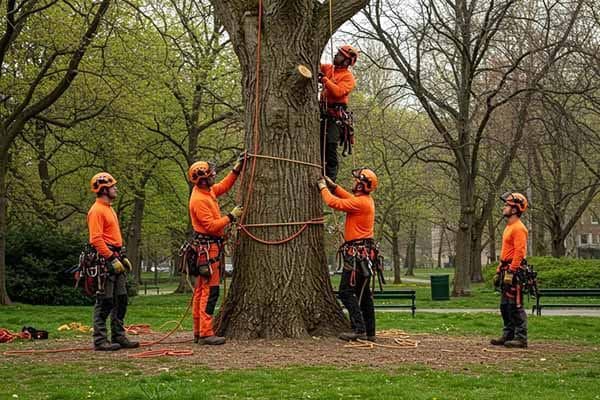
Personal protective equipment (PPE) is the first line of defense during tree removal, significantly reducing the chance of injury from falls, flying debris, chainsaw contact, and loud equipment. Understanding essential safety gear helps Richmond, VA, property owners evaluate contractors and ensure a safe job site.
PPE for tree work covers the head, eyes, ears, limbs, torso, and feet, each item targeting a specific hazard. The immediate benefit is fewer and less severe injuries.
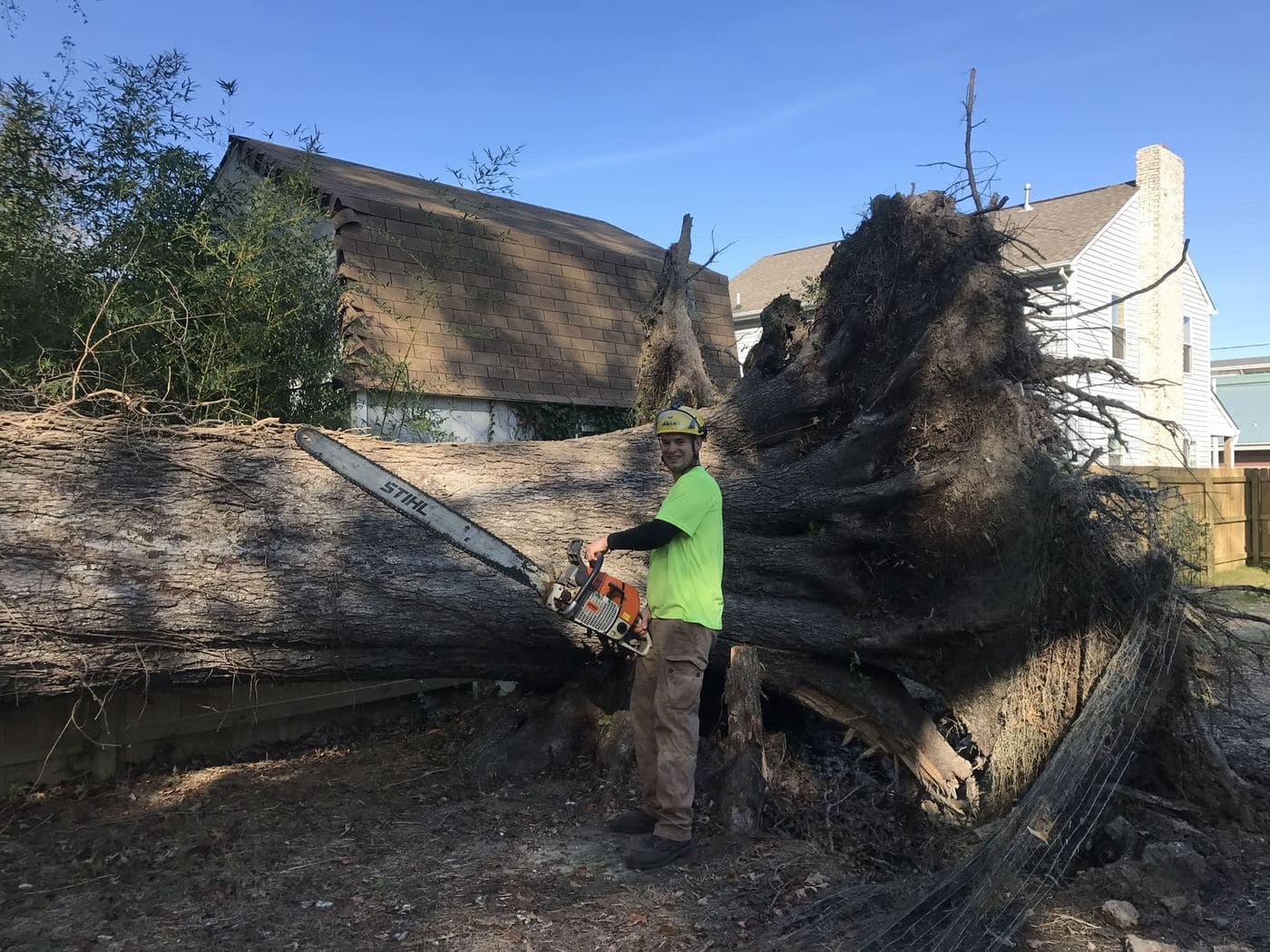
Helmets absorb impact from falling limbs, reducing concussion risk. Face shields and goggles act as physical barriers, deflecting flying chips and blocking saw kickback, preventing head and eye injuries.
Chainsaws and chippers produce noise levels that can cause permanent hearing loss. Earmuffs and high-quality earplugs prevent cumulative damage and aid communication on site.
Body and limb protection focuses on stopping cutting forces and shielding extremities from crushing or puncture hazards.
Chainsaw chaps jam the chain upon contact, while cut-resistant gloves use layered yarns to prevent deep cuts. Protective footwear combines steel or composite toe caps with puncture-resistant midsoles and slip-resistant outsoles. High-visibility clothing makes crews visible to motorists and equipment operators, reducing collision risk.
Industry guidance, including OSHA and ANSI Z133, centers on the employer’s duty to assess hazards, supply appropriate PPE, and train workers. These standards ensure documented assessments, task-appropriate PPE, and routine inspections.
Professional training ensures crews select the right PPE, fit it correctly, and perform pre-use inspections, making the equipment effective in preventing accidents.
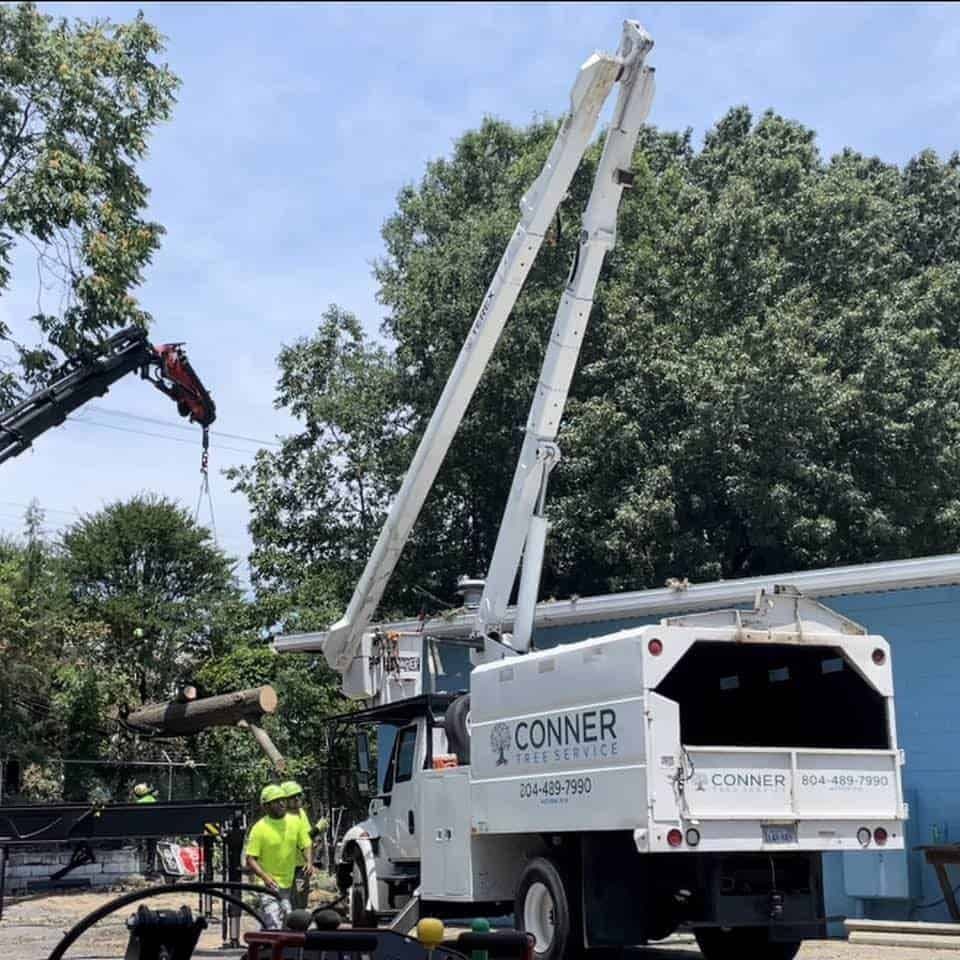
Hiring a provider that prioritizes PPE and safety standards reduces liability, prevents property incidents, and ensures smoother project timelines.
Conner Tree Service follows observable safety protocols, including pre-job hazard assessments, modern equipment, and task-appropriate PPE, backed by insurance. Insurance shifts financial risk from the homeowner, while professionalism (documented assessments, consistent PPE use, modern equipment) reduces the chance of incidents and creates clearer accountability. Property owners should verify both insurance and on-site safety procedures.
Proper PPE is essential to reduce risk during tree removal for both workers and property owners. Understanding how helmets, gloves, chaps, and other gear work helps you hire a contractor who protects people and your property. Prioritize safety-focused, insured services to lower liability and improve outcomes.
Personal protective equipment (PPE) is crucial because it acts as the first line of defense, significantly reducing the chance of injury from common hazards like falls, flying debris, chainsaw contact, and excessive noise during tree removal operations.
Key PPE includes helmets with face shields, safety goggles, earmuffs or earplugs, cut-resistant gloves, chainsaw chaps or trousers, steel-toe puncture-resistant boots, and high-visibility clothing to protect against various specific hazards.
Property owners should look for contractors who conduct pre-job hazard assessments, provide and enforce the use of task-appropriate PPE, offer professional safety training, and carry comprehensive insurance. Observing their on-site practices and asking for documentation are also key.
Free estimates, no obligation, and a straight answer about what the job actually needs.
