Storm damage? We take emergency calls.(804) 489-7990
Time bush hogging around Virginia deer seasons, size trails and shooting lanes, manage food plot edges, and know when brush needs a pro.
Read Time: 8 min
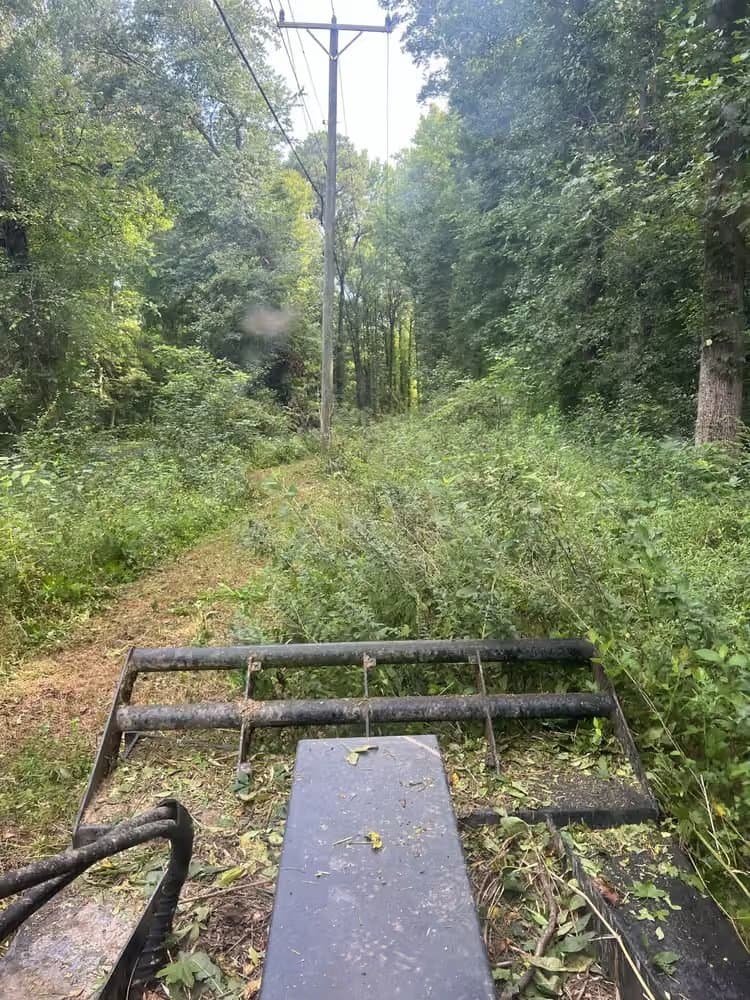
Overgrown trails, tangled greenbrier, and closed-in shooting lanes can undercut a Virginia hunting season before it starts. A summer of growth from autumn olive, blackberry, and young saplings can leave access roads hard to travel and hide the ruts, rocks, and downed timber that damage ATVs and utility vehicles. Dense brush also makes for a noisy walk to the stand.
Well-timed bush hogging reopens access trails, restores shooting lanes, and keeps woody growth off food plot edges. A winter pass after the season keeps your property passable through the wet months.
Plan heavy cutting around the full deer season calendar, not just the firearms opener, and follow up with a winter pass.
Key Takeaways:
Timing matters as much as the equipment. Running a tractor through bedding areas right before hunters take to the woods can push deer off their established patterns and onto neighboring land.
Virginia’s deer seasons begin well before the general firearms opener. Archery season generally opens in early October, early muzzleloader season follows in late October to early November, and general firearms season typically opens in mid-November across most of the state. Dates, weapon restrictions, and special seasons vary by county and change from year to year, so confirm the current calendar with the before you schedule work.
Planning around the firearms opener alone leaves bowhunters hunting freshly disturbed ground.
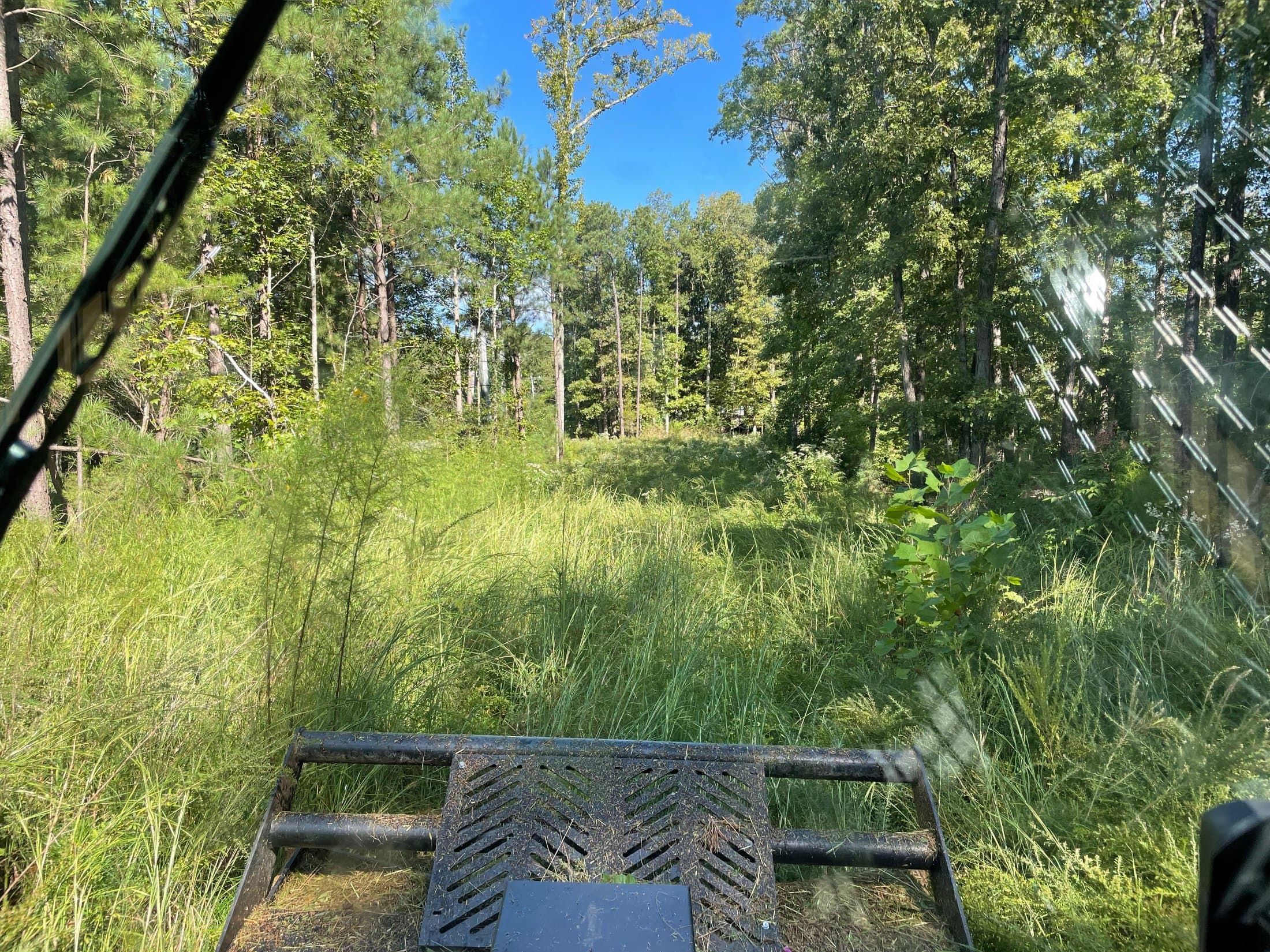
For heavy trail and edge work, late August through September is a practical window in Central Virginia. It falls after the peak nesting period for ground-nesting birds and gives deer time to adjust to new trails and sightlines before archery season opens. Late-summer cutting also knocks back goldenrod, ragweed, and briars on your trails before they finish setting seed. Leave some of these plants standing away from your trails, since they provide seed and cover for wildlife.
Any cutting once seasons are open should be light and quick: touching up a lane, not reshaping the property.
Once seasons close, a winter pass suits broader property work. With leaves down, trail edges, encroaching saplings, and invasive shrubs such as multiflora rose and autumn olive are easier to see. Mowing sets these invasives back, but both resprout after cutting, so expect to repeat the work or pair it with other control methods. Working when the ground is frozen or dry also reduces rutting and soil compaction along trails and low spots.
Open trails make pre-dawn travel quieter. Summer growth can close a lane that was clear last season, so check last year’s trails before assuming they are still usable.
No single standard applies. Size each trail to the largest machine that will use it, and leave extra room for edge growth. Common starting points:
Shooting lanes work best as narrow corridors rather than large openings. Wide clearings can leave deer feeling exposed, and many will cross them only in low light. Narrow lanes cut from your stand toward travel routes and field edges create shot opportunities while keeping cover close by. Width and length depend on your terrain, stand, and weapon.
Leave some stubble rather than scalping the ground. Many landowners set the cutter around 5 to 6 inches for trails and lanes, which keeps ground cover in place on slopes, limits erosion during fall and winter rains, and keeps blades clear of most rocks and stumps.
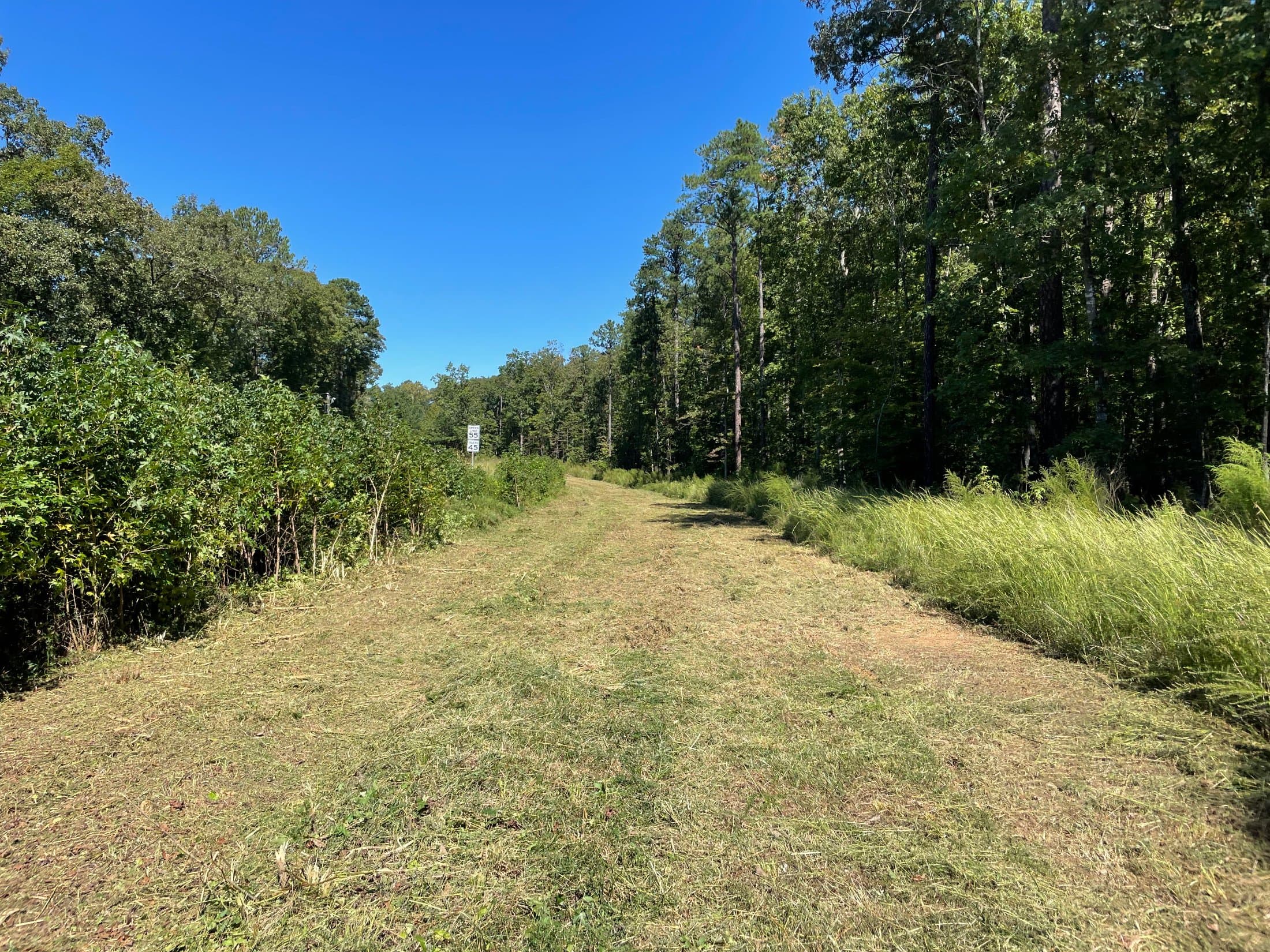
Food plots are often a focal point of fall and winter deer activity, but unmanaged borders gradually fill with woody growth that shades and crowds out clover, brassicas, and cereal grains.
Deer tend to favor edges where cover meets food, and a soft, brushy transition between timber and plot gives them a place to stage before stepping into the open. When managing plot borders:
Ice and wet snow can bring weakened limbs and dead trees down across trails when you need them most. During your late-season pass, prune low branches along vehicle paths and clear fallen logs out of the travel lane. Dead standing trees and hung-up limbs over a trail are a job for a professional.
Keeping culverts and field ditches clear of debris helps water move during winter storms instead of pooling on trails and washing out their base. Cutting along streams and wetlands is a different matter. Henrico, Chesterfield, Hanover, and other localities in the region administer the Chesapeake Bay Preservation Act, which restricts vegetation removal within Resource Protection Area buffers along many streams and wetlands. Work in streams or wetlands may also require permits. Check with your county before cutting along a creek bank or wet area. Read our Land Clearing Permits Guide for more information.
Where cutting near ditch banks is allowed, keep the cutter raised to protect the roots that hold the banks in place.
Match the equipment to the material. Every rotary cutter has a manufacturer-rated maximum cutting capacity, and pushing brush beyond it risks broken equipment and thrown debris. Check your operator’s manual before you start.
If years of growth have closed off your trails, Conner Tree Service can help reclaim them.
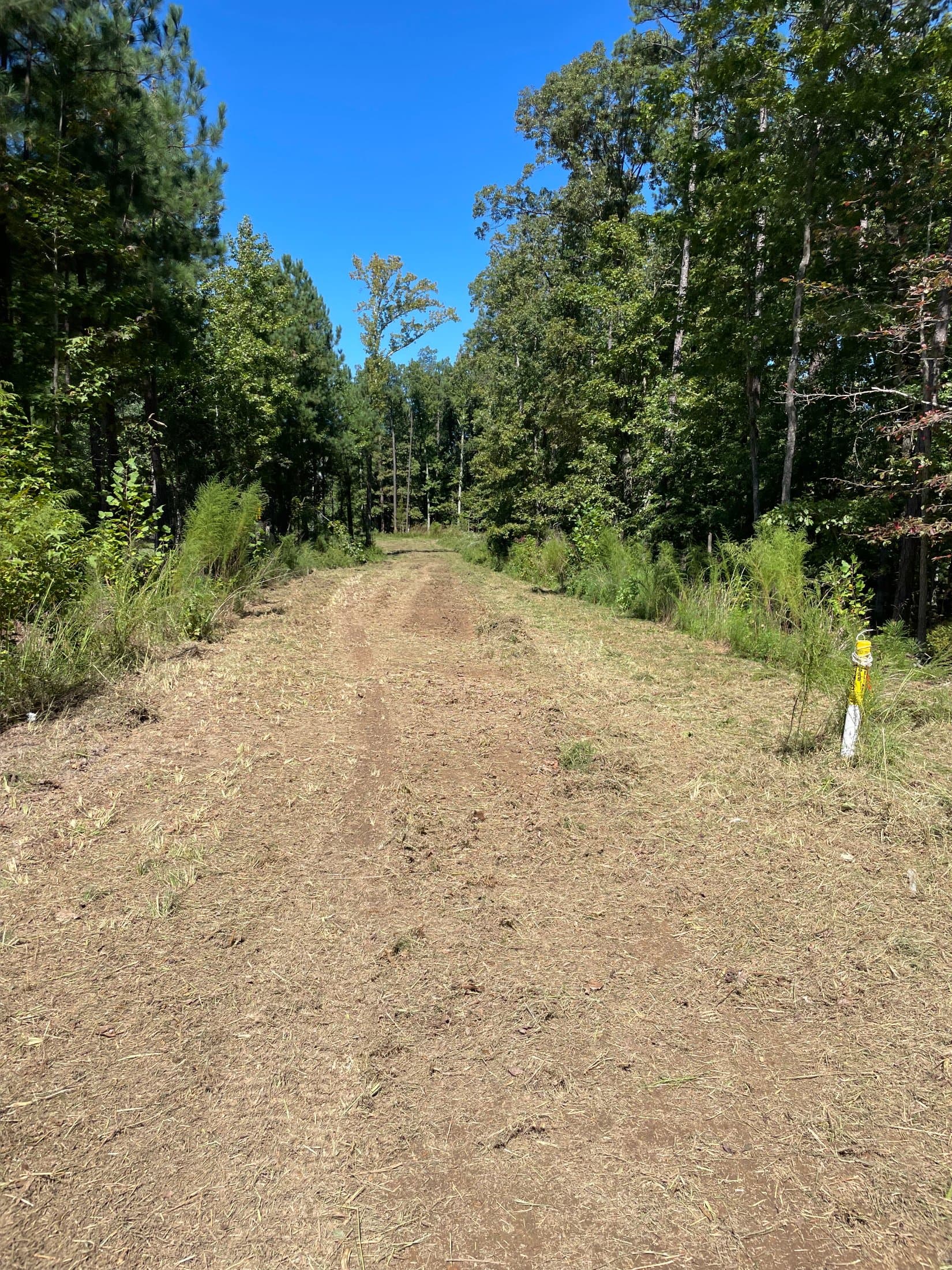
What people do wrong: Driving a tractor through tall brush or goldenrod without checking the ground first.
Why it’s a problem: Tall cover can hide old wire, stumps, rocks, and metal debris that damage blades, shear bolts, or bend driveline parts.
The right approach: Walk or ride unmaintained trails before cutting and flag stumps, rocks, washouts, and wire with high-visibility tape.
What people do wrong: Dropping the cutter low to get a lawn-like finish on woodland trails.
Why it’s a problem: Blades strike rocks and soil, dulling them and adding shock load to the cutter, and the bare ground left behind erodes more easily.
The right approach: Leave several inches of stubble. Many landowners work around 5 to 6 inches on woodland trails and adjust for terrain.
What people do wrong: Putting off heavy mowing and chainsaw work until just before the firearms opener.
Why it’s a problem: Noise, activity, and sudden habitat changes can shift deer movement right as seasons open, and archery season is already underway by then.
The right approach: Finish heavy cutting before archery season opens and keep any in-season work light.
For heavy work, late August through September, before archery season opens in early October. Since dates can vary based on location and year, make sure to confirm current dates.
Common starting points are 12 to 14 feet for truck and tractor roads, 8 to 10 feet for UTV trails, and a single mower pass for walking paths.
Cutting close to or during the season can temporarily change deer movement. Cutting well ahead of the season gives deer time to adjust, and they often use mowed trails as travel routes.
Within limits. Every rotary cutter has a manufacturer-rated maximum cutting diameter. Beyond that rating, use a heavier cutter or forestry mulching.
Many landowners work around 5 to 6 inches, which keeps blades clear of most rocks and leaves cover to limit erosion.
Bush hogging cuts grass, brush, and light saplings and leaves the cuttings on the ground. Forestry mulching uses a powered drum or disc head with carbide or steel teeth to grind trees, brush, and stumps into mulch at or near ground level, and it handles much heavier material.
A well-timed cutting plan makes your property safer, easier to hunt, and passable through winter. Size trails to your equipment, keep shooting lanes narrow, leave a soft edge around food plots, and finish heavy work before archery season opens. A winter pass then keeps invasive shrubs and saplings from taking back what you cleared, and handling small problems now keeps them from becoming bigger repairs in spring.
If your trails, food plot edges, or overgrown acreage need more than routine mowing, contact Conner Tree Service to talk through your property.
Serving Richmond, Henrico, Chesterfield, Hanover, Mechanicsville, Glen Allen, Midlothian, and the surrounding Central Virginia area.
Free estimates, no obligation, and a straight answer about what the job actually needs.
